

This is your daily market analysis. The author writes from curiosity to curious people. View this as a thought exercise with real time information that measure direct impacts on economics, equities, crypto and commodity prices. Industries, narratives and wealths!
→ We have one single goal - understand the world day-by-day, to maximize our chances of winning, by making intelligence operations on markets.
Want more? Follow the author on X
Thanks, to read and supporting it by following for updates. Share, comment and engage to leverage the information, and maximize payout!
[Audio version in podcast format]
The ‘Saaspocalypse’ continues to unfold, with software industry stocks down more than -30% amidst this AI panic. However, the market is usually a pendulum; while this reaction likely holds some valid insights, investors are exaggerating, creating potential bargain entries if the trend continues. Jensen Huang noted that the recent sell-off triggered by fears of disruption is “the most illogical thing in the world”. The reality is that AI will rely on existing software as tools explicitly designed for efficiency rather than replacing them entirely. While it is true that technologies like claude code could enable the rapid creation of services and competitors—putting pressure on prices—factors such as user experience, confidence, and path dependency remain highly relevant hurdles.
Investors have long favored these companies for their sustainable, low-volatility ARR, but fears have emerged that users might coy and replace paid services. I believe disruption will not apply evenly across the board. I classify SaaS into two categories: the first includes internal B2B services easily substituted by cheaper alternatives; the second includes SaaS that generates revenue for the client. The latter group offers significant stickiness and is unlikely to face the same revenue risk. Applications like Photoshop, for example, generate income for professional photographers, ensuring continued usage. Adobe, currently trading -60% from ATH, -20.2% YTD, and -35% over the 1-year period, has been hurt by this sentiment but will probable mean revert, boasting +10% YoY revenue growth and better EPS than expectations on last December report.
Beyond the software sector, there is a distinct psychological sentiment among consumers during economic downturns; they spend less overall but still desire to look and feel good. This relates to the strength of revenues in “Lipstick stocks,” which tend to improve during difficult economic periods. ‘Lipstick index’ stocks like EL, UL, and OR have outperformed the SP500 index by more than 1,000% YTD, rising double digits. This signals two things: investors are targeting a bad economic outlook ahead, and capital is moving toward safer assets. I believe this defensive move will continue rising into 2026, anticipating an eventual downturn on MAG7 and US100.
In the crypto markets, Bitcoin keeps being the asset that dumps the most ahead of continued geopolitical and nuclear tensions involving Iran. Bitcoin has been the preferred asset to short during these events for multiple reasons. Unlike gold or stocks, it operates 24/7 with high liquidity, making it the perfect selection when major announcements occur after hours or on weekends. It allows traders to time entries perfectly and hedge more effectively. Furthermore, it requires less margin; because Bitcoin has high perpetual liquidity, only a small percentage of the total order is required on the account to short, eliminating the need for massive capital. Historically, Bitcoin also has significant long leverage attached, providing extra yield for short-sellers in the form of funding rates and extra income from long liquidation cascades.
However, Bitcoin is now sitting with perfect conditions to act in reverse. As soon as prices bottom—currently tracking critical levels near $70k—it will likely become the selected asset to long while alternatives are absent from the market. So far, the largest traders have been long gold/silver and short BTC to trade geopolitical tensions. When the shift comes, the optimized trade will invert: shorting gold/silver and longing BTC to short squeeze the sellers and aggressively rip the market upward. As prices go down, using Bitcoin as a short asset becomes less attractive because a short-squeeze event becomes more probable.
ETFs continue to be drivers of price, though Bitcoin remains its own beast. I don’t see DATs cascading, but with positive mNAVs, they will not see significant accumulations yet. Long-term holders are starting to accumulate, and we are tracking this closely. As soon as these players strictly start buying the bottom, the dynamic changes. Geoffrey Kendrick, Head of Digital Assets at Standard Chartered, mentioned the “recent selloff across cryptocurrencies has created a buying opportunity. We are buyer of this dip in digital assets.” Standard Chartered lowered their end-2026 price for SOL but kept it at $250—more than double the current market price—while raising the longer-term projected price to $2,000 by end-2030.
Following the manic rally on gold and silver pushing to record highs, the market underwent a brutal correction last week amid chaos. Leveraged positions were flushed out through forced liquidations and margin pressures. Prices broke key MA, volatility spiked to extreme levels, and CTAs remained in sell mode. Trading volume on ETFs hit lows not seen since the bull run began, signaling exhaustion but also potential for consolidation before the next directional move. We are in a “sell and wait” mode for metals, which gives space for Bitcoin to become the retail substitute commodity if prices assist.
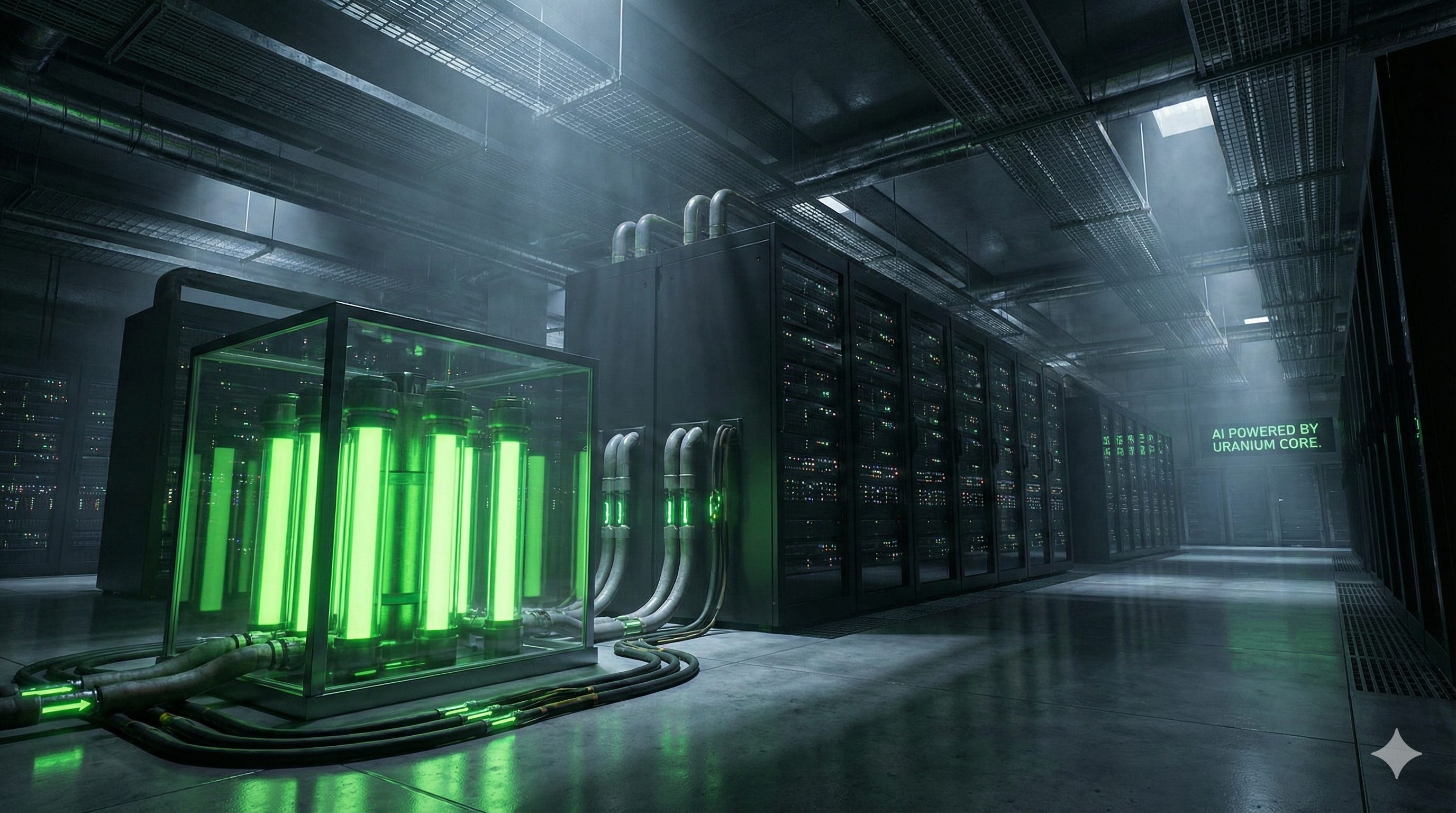
While this brutal correction did not provide good entries on silver and gold, and I do not expect these metals to outperform other commodities by year-end, the aggressive move offered excellent entries on critical minerals like Uranium. Uranium is an indispensable fuel source; without it, a nuclear power plant cannot function. Even with theoretical developing technologies attempting to create substitutes, this will not happen in the near future. The global race to nuclear power is here, with China, the US, Europe, India, the Middle East, and Africa rushing to generate power for the new era of data centers. Consequently, the world faces a massive Uranium supply deficit set to worsen by the end of the decade. The URA ETF (Uranium price ETF) is up +20% YTD but down -15% from local highs, while the URNM ETF (Uranium miners ETF) is up +25% YTD but down -20% from local highs. These ETFs are sitting at big discounts following the gold and silver contagion.
In the DeFi space, Hyperliquid is the crypto project of the year. The last HIP-4 update, following HIP-3, enables new and larger markets. Hyperliquid has moved from crypto perps to tokenized stock perps, prediction markets, and option markets inside a single platform. This single-platform thesis is radically important for portfolio managers and traders; the ability to cross-margin and hedge between products creates entirely new features for investors. HIP-4 is a protocol that enables independent builders to create new markets, but to do so, builders must lock 500k HYPE tokens, now worth $17.5m. This mechanism forces builders to buy and lock HYPE, creating pressure not only through extra revenue funnels but also through direct token buy pressure. This is tokenomics working at scale, further validated by Ripple announcing they integrated the Hyperliquid venue on their Ripple prime brokerage platform—the first DeFi venue integration of its kind.
Meanwhile, Europe is being left behind in multiple technology eras, and stablecoins are just another layer of this lag. This worsens their position because it directly reflects fiat selling pressure, deteriorating their currency and economy. The entire crypto market works on USD-pegged stablecoins, even though only 15% of crypto users are based in the US. This dominance was made possible by market concentration in liquidity and DeFi products denominated in USDT and USDC. It is hard to defeat now as the market consolidates around these assets. EUR-pegged stablecoins only have a market of 650m, yet SP Global says they are “ready for adoption” and predicts that, at scale, stablecoins could rapidly grow to 1.1T by end-2030. I do not think this scale is feasible, as that number equals 4.2% of Eurozone banks’ overnight deposits. When the entire market liquidity functions in one pair, making the shift is very hard and costly. In this case, I believe the first-mover advantage has stickiness, though it will be curious to see how it plays out.
We are almost there.