

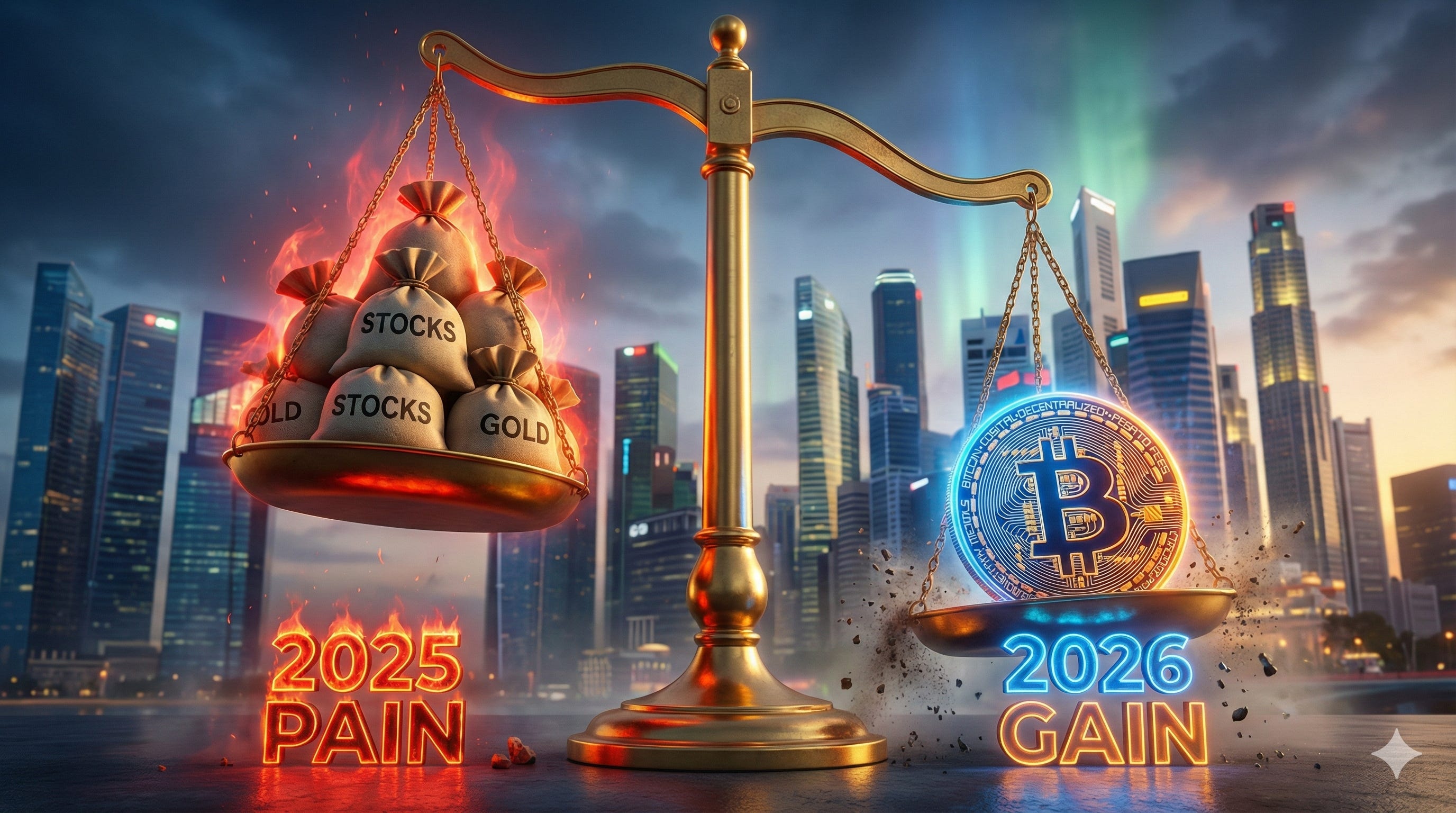
“The core thesis for 2026 is based on a reversal of Opportunity Cost.”
[Audio version in podcast format]
1. The ETH vs. SOL Re-Rating: A Value Rotation
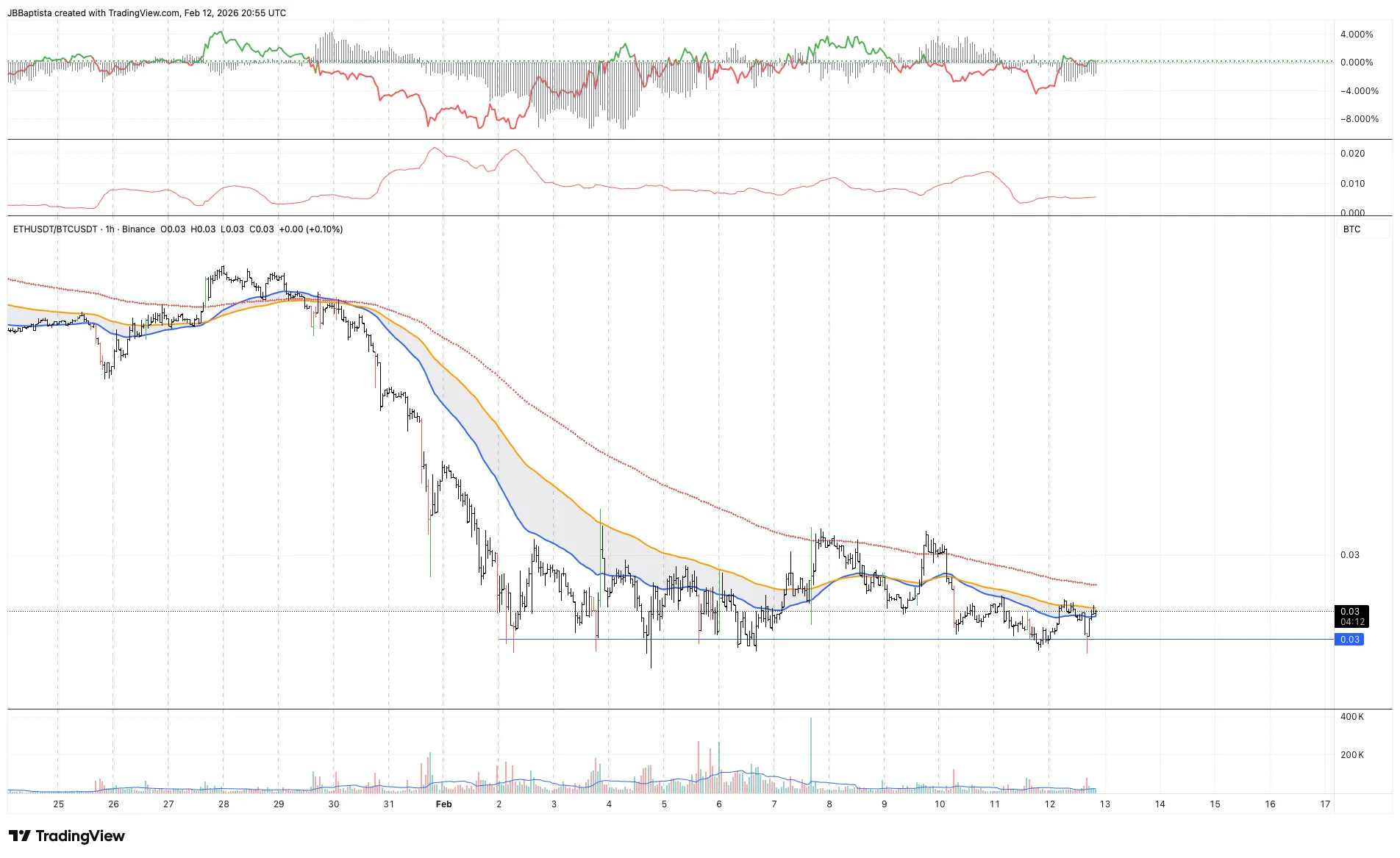
I am seeing a clear bottom formation in the ETH/BTC pair. The range has cleared, and we are seeing significant support and rotation back into Ethereum. I anticipate Ethereum will significantly outperform Bitcoin in the short-to-medium term. ETH is widely correlated to BTC with higher beta turning it much more attractive; when BTC bounces, ETH is poised for a much sharper recovery. I am more bullish on ETH relative to BTC.
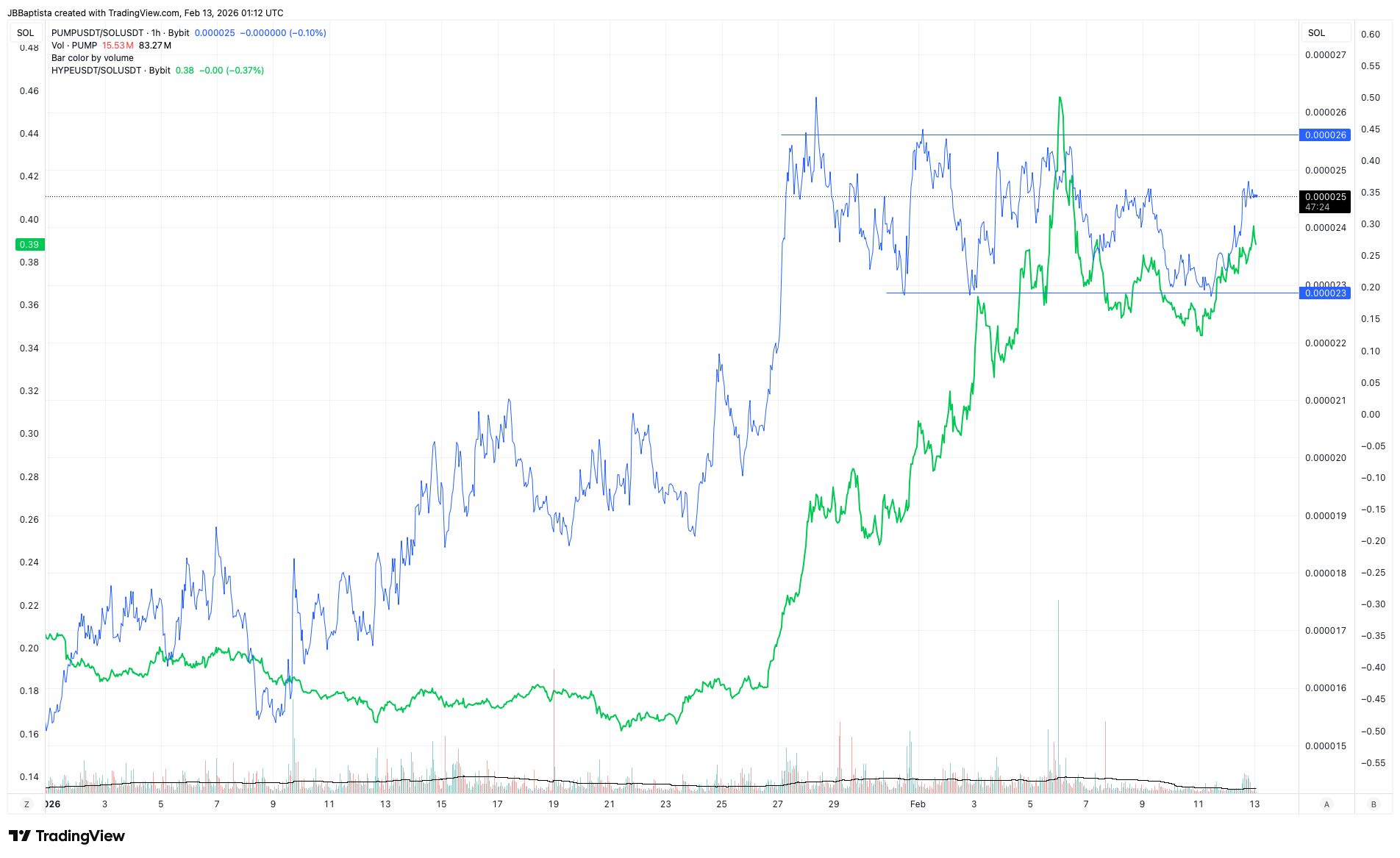
Conversely, I am becoming increasingly bearish on SOL relative to the market for several reasons (In a everything goes up scenario SOL goes also up, just with less intensity):
The Narrative Shift: Solana’s recent activity has been dominated by “the capital markets” thesis, creation coins economy, specifically via Pump.fun. However, Pump.fun is effectively a standalone application business. The value is 99.999% capture by the application and not by the L1 token (SOL).
The “Hyperliquid” Threat: Solana has historically concentrated on capturing the “capital markets” and “on-chain NASDAQ” narrative, heavily reliant on APAC/Chinese liquidity. However, Hyperliquid has emerged as a superior competitor in this vertical. Hyperliquid is successfully building the high-speed, on-chain order book for perpetuals and spot assets that Solana promised. The relentless product is not only capturing the token trading narratives but also It is capturing the “tokenized stocks” and derivatives market faster, creating better incentives for market creators and traders.
Conclusion: I prefer holding HYPE or Pump tokens over SOL. The “Solana Premium” is eroding as its utility is cannibalized by its own top apps and faster specialized chains.
2. Sector Focus: Layer 1s and crypto-software plays
I am pivoting focus toward “software companies” (DeFi/Infra) and specific Layer 1s that show traction:
L1 Outperformers: In the Layer 1 bucket, Canton (CC) and Monad (MON) are showing strong relative strength and traction compared to BTC
DeFi Blue Chips: I am looking at protocols with real revenue and strong brand specifically Aave (detailed below); Hyperliquid; Aster; PumpFun.
3. Macro Landscape: Global Deceleration vs. US Resilience
The macro data suggests a global cooling, while the US labor market remains too tight for immediate rate cuts.
UK Economy: GDP growth came in at 1.0%, missing the forecast (1.1–1.2%) and coming in below prior numbers.
China Economy: Clear deceleration. Inflation is at 0.2% (forecast: 0.4%), and data indicates cooling markets.
US Labor Market: Unemployment dropped to 4.3% (forecast: 4.4%).
Implications: The strong US jobs report has priced out a March rate cut. The consensus has shifted to May for the first potential cut. Consequently, yields remain elevated, pushing hard assets like Gold (down 5bps) and Silver(down 20bps) lower in the short term.
4. Geopolitics: Iran/US Tensions & Oil
There is a divergence between media noise and market pricing regarding US-Iran tensions.
The Media: Reporting escalating tensions and fears that the US might strike Iran (”hit” Iran).
The Market: Oil markets are telling a different story. Crude prices have dropped 3.3% (from $65 to $62).
The Reality: The oil market is pricing in de-escalation. It signals that traders believe Trump is likely to cut a deal with Iran regarding nuclear proliferation rather than engage in kinetic conflict. The market is fading the war fear.
5. Regulatory Tailwinds: The “Clarity” Era
The US regulatory environment is shifting 180 degrees under the new administration.
Paul Atkins & The “Clarity Act”: There is a detailed, cooperative approach emerging between regulators and the CFTC. Atkins is signaling a clear path for token issuance, stating that tokenization can create a “better, cheaper, faster financial system.”
US as Crypto Capital: This rhetoric supports the thesis that the US will lead the next wave of crypto capital markets. This is exceptionally bullish for US-based software/crypto-native startups and stablecoin issuers.
6. High-Conviction Protocol Updates
Three major updates validate the “Institutional DeFi” thesis:
A. Aave (AAVE) – The Governance Pivot
Aave Labs has proposed a massive shift in governance. The AAVE token will now exercise greater control over the entire organization, effectively bridging the DAO with the venture arm. Aave DAO now have the function to seed capital into Aave labs and invest to support software evolution. This “token centric model” represents a complete turnaround for aave protocol, only possible with a clear, green legislation support. It’s a complete shift from previous administrative hurdles to the friendly US regulatory outlook, the impact is this. Very positive.
B. Pump.fun – The Business Model Unlock
Pump.fun has released a mobile update allowing creators to allocate fees to any account.
Why it matters: This transforms Pump.fun from a meme-generator into a business-creation engine. Open-source projects or accounts can now be funded directly via trading fees from a token. It is a new capital formation model for the open web.
C. BlackRock & Uniswap – The “Buidl” Bridge
BlackRock is integrating its BUIDL token (tokenized fund) with Uniswap X.
The Mechanism: While currently whitelisted for institutional players, this creates a direct bridge between traditional securities and onchain work flows.
The Signal: This validates that all asset trading will eventually migrate to blockchain for instant settlement and collateral efficiency.
7. The 2026 Thesis: The “Opportunity Cost” Flip
The core thesis for 2026 is based on a reversal of Opportunity Cost.
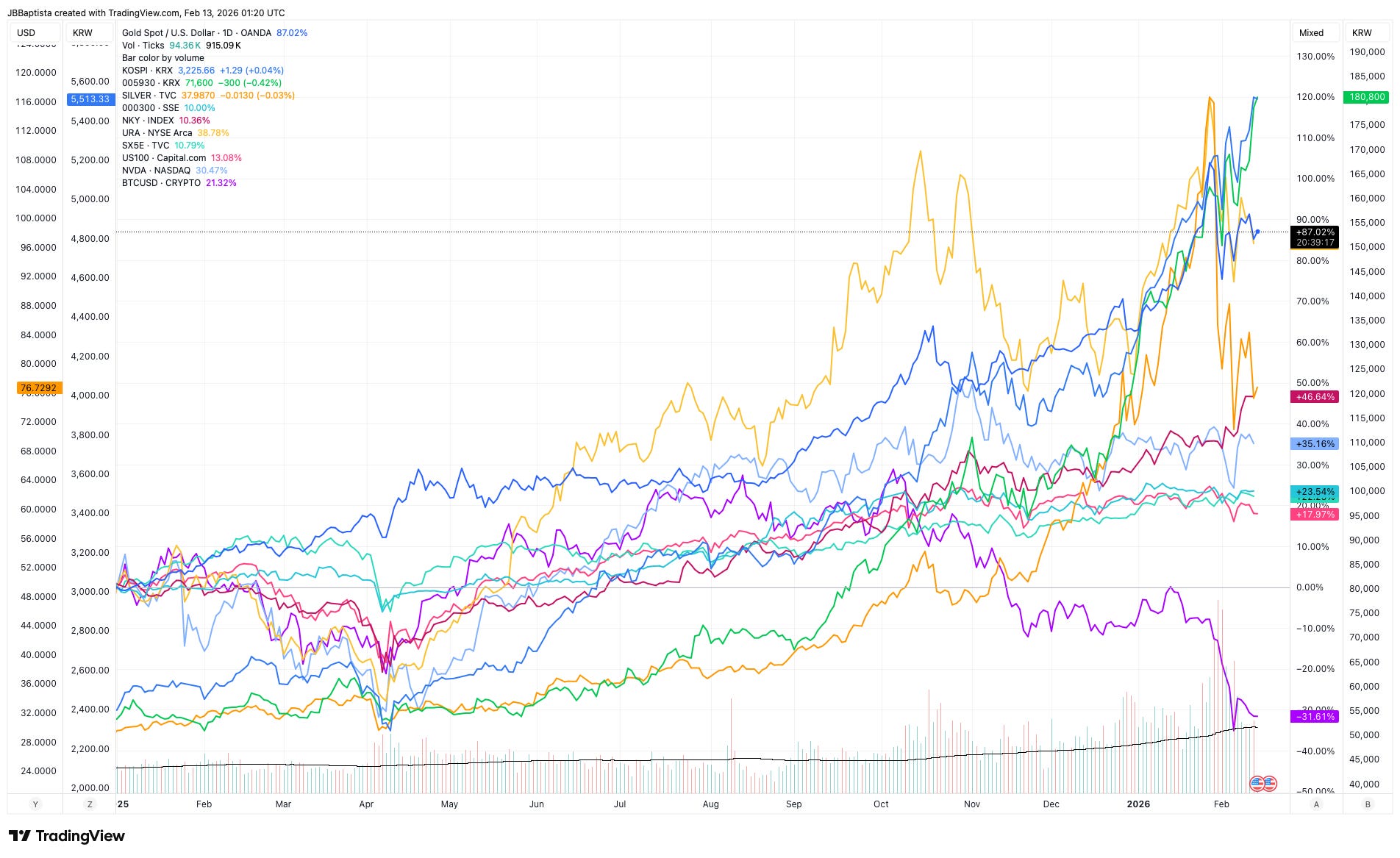
The 2025 Context: In 2025, holding crypto was painful because everything else went parabolic.
South Korea: The KOSPI index and tech giants like Samsung and SK Hynix (AI memory) more than doubled (up 180%+), driven by massive retail flows
TradFi: Gold, Silver, European stocks, and US equities all went “to the roof.”
The Pain: The opportunity cost of holding BTC (which was chopping/underperforming) was massive.
The 2026 Reality:
Traditional markets are now historically expensive (”to the roof”).
Crypto is the only asset class that has underperformed and is now trading at deep value.
The Pivot: With legislation passing in Q1/Q2 and institutional floors being set (e.g., Binance SAFU fund buying $1B BTC), capital will rotate from expensive equities into cheap crypto.
Conclusion: Buying BTC below $70k here is a gift. The risk/reward has flipped. It is no longer “expensive” to hold crypto; it is risky to hold overextended traditional assets. We are entering an exponential catch-up phase for crypto assets in 2026.
This is intended to be a thought exercise, and not financial advice. Reach out in open conversations, DM me or comment anytime.
I’m aiming to provide clarity about the world day-by-day, and I hope you get smarter and more financial intelligent every day. Each day we increase our chances of winning.
Thanks, Joao