

My thesis relies on two key points regarding Meta
Generational shift away from Meta social media networks;
Increase privacy issues that threaten Meta’s business model.
(This article does not express financial advice, make it clear)
Generational problem
Meta faces a critical generation decline.
Meta’s network rests on top of three social media applications:
Facebook
Instagram
WhatsApp
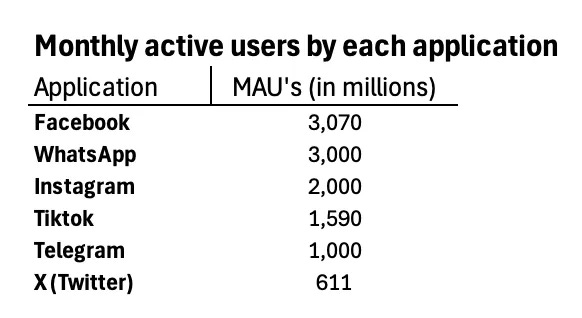
Together, they claim 7 billion monthly active users (MAU), even if this figure is likely inflated by overlapping accounts, meta network have at least 3 billion unique humans (the biggest network of all time), over 50% of the total adult population.
Tiktok has 1.5b MAU, Telegram has 1 billion MAU and X has 611 million MAU. The economic value of Meta depends on sustaining this network effect, and network effect is sustained by number of users and time spent per user on their network.
Essential questions emerge
Is this sustainable?
Will the users continue on these meta applications?
Are other applications better feed the users wants?
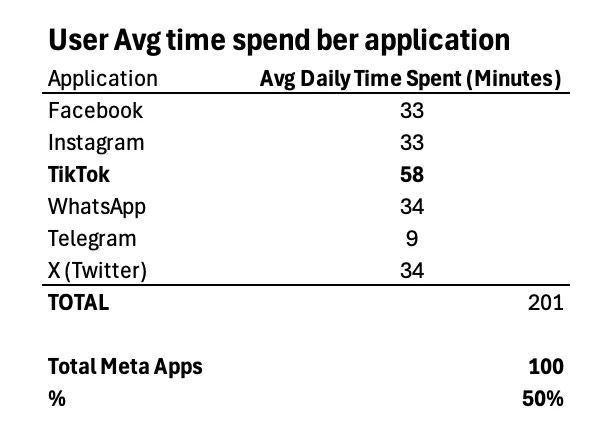
Previously the user spent 100% of their time on Meta’s social media products. Now they are only spending 50% of their time on meta’s products. And by a single application comparison, users spend almost double the time in tiktok than on instagram or facebook.
The economic value is highly dependent on sustaining this network effect.
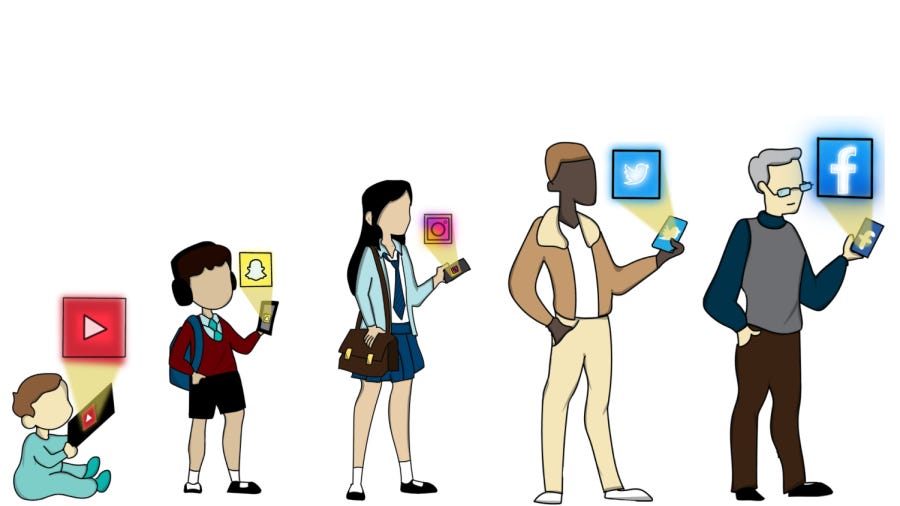
But facebook launched in 2004, is now an “old generation” application, as proven by data. When it started as a college application - the first users were between 18-25 years old, now, as they aged, they have between 41-46, they are millennials and Gen X generations.
Millennials and Gen X dominate its user base. These generation switnessed the internet’s growth and adopted facebook early. The stickiness of this users are high, these users rarely try new applications due to high switching friction (all friends being in facebook not in other application). Conversely, younger generations reject Facebook, in favor to “better” applications like tiktok and X.
Users are losing interest in Meta’s applications in favor to new ones, better versions, newest versions. Maturation is happening on Meta’s social media applications. As interest in Facebook collapse, Instagram drops and whatsApp stabilize. The new social media versions are growing, X, TikTok and Telegram.
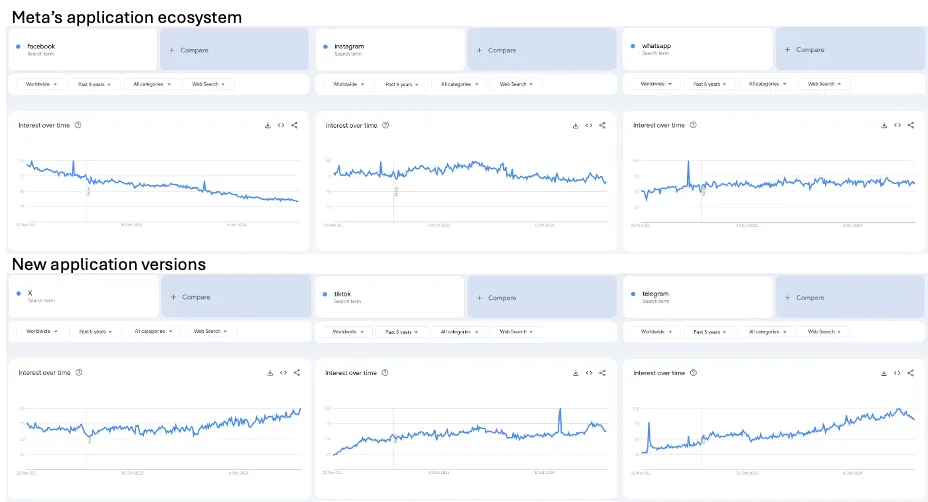
This generational shift represents a lost of market share for Meta. New social media applications are eating their market at high velocity.
Facebook usage is highest among Gen X and millennials compared to Gen Z;
Instagram usage is higher on Gen Z than millennials or Gen X;
Tiktok, Telegram and X follow the same trend, dominated by Gen Z usage but with significant differences between Gen X/millennials and Gen Z;
Telegram and X, have almost zero media usage by Baby boomers.
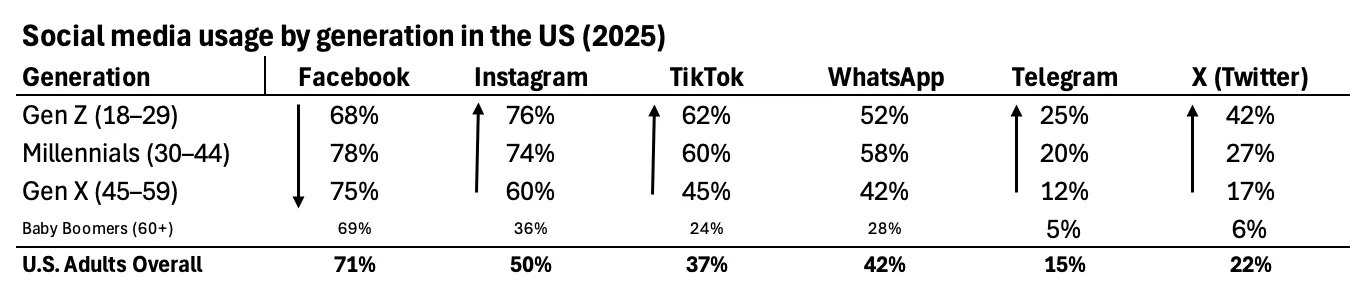
Meta social media applications dominate with over 60% usage by the newest generation, but this moat is eroding.
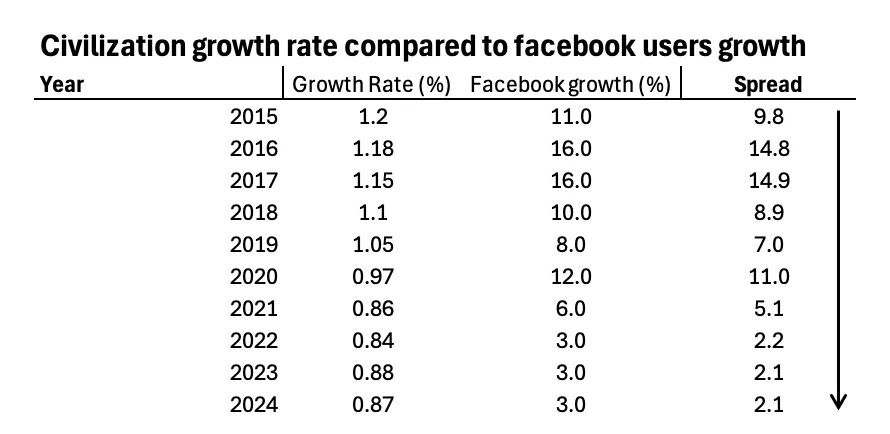
Double-digit growth from 2015-2020 has slowed to low figures - 3% (At the end of the stage they could grow at the civilization growth rate). If this growth shift negative, network effects will invert aggressively.
This lack of user base growth means that their growing multiples must be adjusted, the ability to monetize slows down, has they achieve their maturation:
Max amount of users and
Max amount of user time spent on applications
At the start, social media applications can be complementaries. The user is shared by multiple social media applications. But over time social media applications act as substitutes.
A new app offers unique value, users download it, use it. Eventually, the old app copies the unique feature (happened when Instagram copied Snapchat Stories and TikTok Reels).
Once the features of both applications are identical, they are fighting the same market, the winner takes all. Most of the time the winner is the old applications because they have higher network effects. Users see no reason to maintain duplicate applications, user get out off the losing application.
If the substitute sustains market presence, it disrupts the incumbent. This innovation cycle is currently favoring competitors.
As we see high and higher growth outside Meta’s ecosystem, user preferences of new generation being in favor to new social media substitutes, disrupts the Meta economic power and increase probability scenario to end up like Nokia. Facebook and Instagram are growing at a 3% rate. Meanwhile, Telegram and X are growing at 5% and 7%. TikTok grows at 4% despite US regulatory concerns.
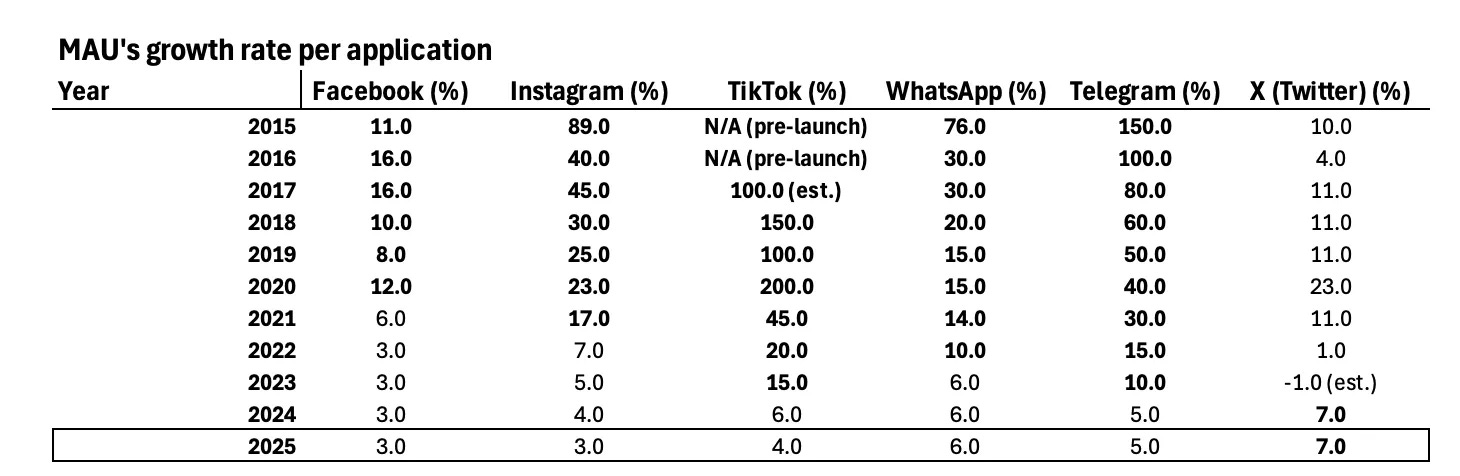
As Meta’s growth falls below the rate of civilization growth, the application effectively stagnates. Meta has matured as a corporation, and its multiple should reflect that maturity. We are roughly 2% away from that reality.
New generations no longer appreciate Meta’s products. In terms of user experience, Telegram offers a fundamentally better product than WhatsApp. The only thing holding older generations back is that their friends remain on WhatsApp. Gen Z does not have this barrier. They test and adopt new applications readily. Similarly, X offers a superior product to Instagram for specific use cases. Tiktok a better product than instagram for short videos.
Facebook application is the biggest application for Meta. And it is in a critical generational decline. As younger users don’t use it, reduces the succession rate in favor to other applications like instagram, tiktok, X.
Facebook has 3 billion monthly active users and in an extreme scenario in 10 years could end up with zero. Destroying the Facebook revenue and the “Family of Apps” premium. Losing the ability to charge more per click than any other application, and losing at the same time, advertiser volume plus MAU.
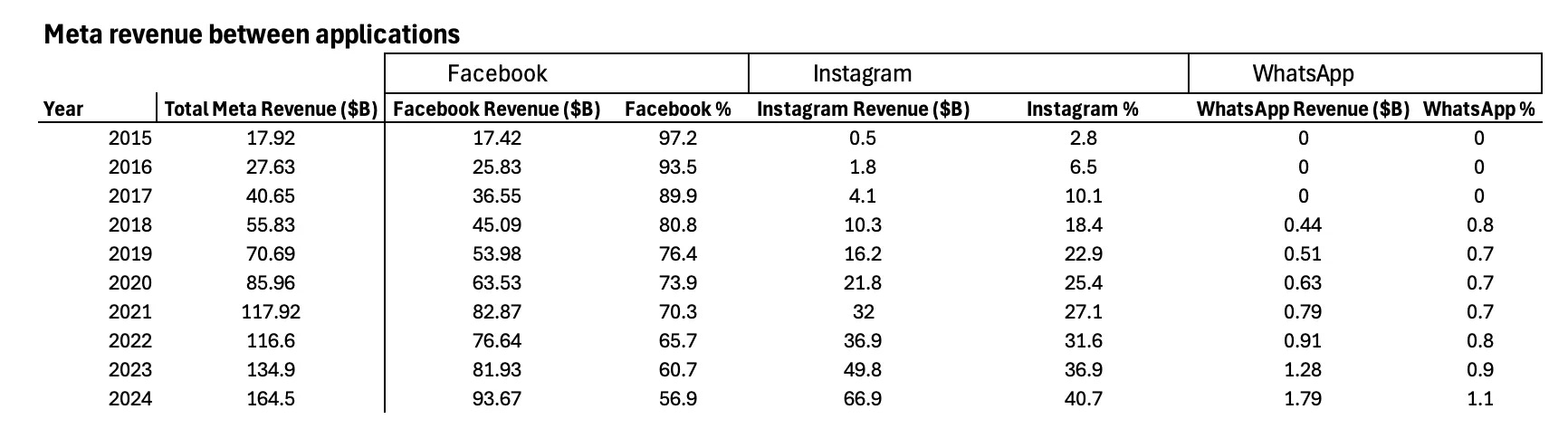
Facebook currently produces $93b in annualized revenue. As usage declines, this revenue is at risk.
Advertisers will not spend capital on platforms where users are absent. Creating a negative flywheel that could destroy Meta’s economy:
lower users → lower advertiser’s → less revenue → lower users.
As user behavior shifts, it reflects on the revenue profile. Meta started 100% concentrated in facebook, now almost splitting between facebook and instagram. As instagram continue to be important in the younger generations. But losing instagram, Meta’s have no way to go, other applications are owned by other organizations. Revenue concentration can dictate an increase risk for Meta, increases the risk dependency of one application individually, and at the same time it loses the “Family of Apps” premium.
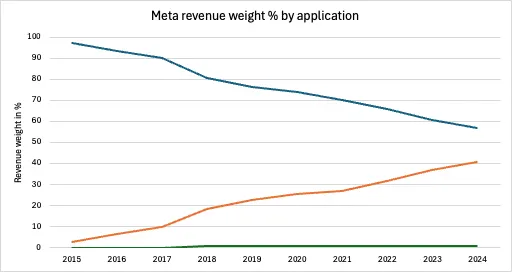
So far the market grow’s entirely. And both applications increase their revenue YoY, but I believe as one application emerge in favor to the other. An invert revenue trend will emerge between applications - predicting that facebook start having negative revenue growth while instagram and whatsApp continue to have positive growth. Instagram will have to eat the market of Facebook to grow.
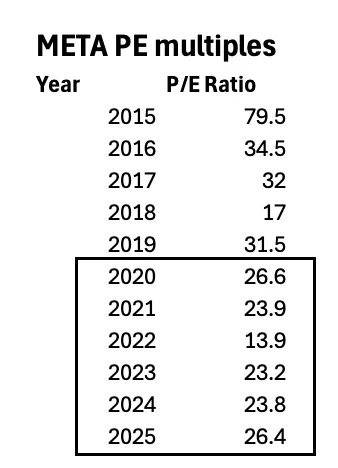
Facebook revenue grew 14% in 2024, the long-term trend shows a decline in growth rates. 2022 was the first year Facebook revenue growth hit -7%. This coincided with TikTok’s major growth period and also markets priced META 56% lower PE multiple. At this multiple META should be trading at around $300 price per share.
WhatsApp generates nearly no revenue and is not designed for it. Conversely, Telegram can monetize easily. Because is not design to monetize if WhatsApp pushes monetization, they risk losing more share to Telegram.
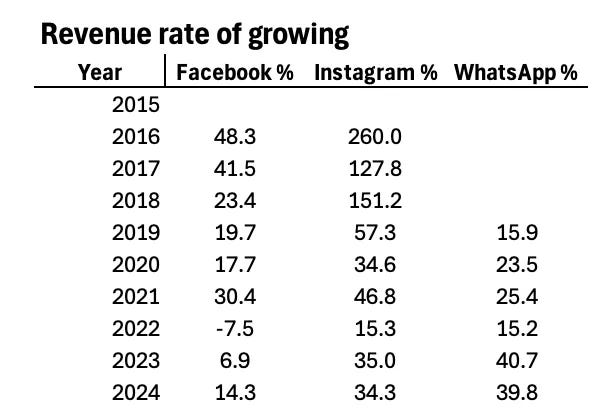
Meta’s is not in healthy growth position in terms of social media application ecosystem. And as their entire economics works on top of their applications, lagging this, could mean increasing dowside risk and price adjusted to the downside.
Facebook application could end up being the MSN of this cycle. Meta’s could end up with instagram and whatsApp applications, losing their FoA premium. While this risk is increasing, Meta keep being trading at the exact same multiple as 5 years ago, 26 PE multiple.
This pricing multiples assumes immediate success in AI or VR, ignoring the bleak social media outlook.
Without massive user growth, Meta has only two levers to increase revenue:
Increase the cost per click for advertisers
Increase advertising volume
Since competition exists, they cannot raise prices indefinitely. Advertisers must remain profitable. They are capped in terms of how much they can charge.
Alternatively, increasing ad volume disrupts the user experience. This echoes the decline of TV against streaming services like Netflix. TV oversaturated viewers with ads, driving them away.
Meta’s is already feeling the changes, increased the number of advertising on the instagram application to boost their revenue - It’s literally one follower post per one ad on the feed.
At the same time, estimates suggest Meta increased CPC (cost per click) recently to boost revenue.
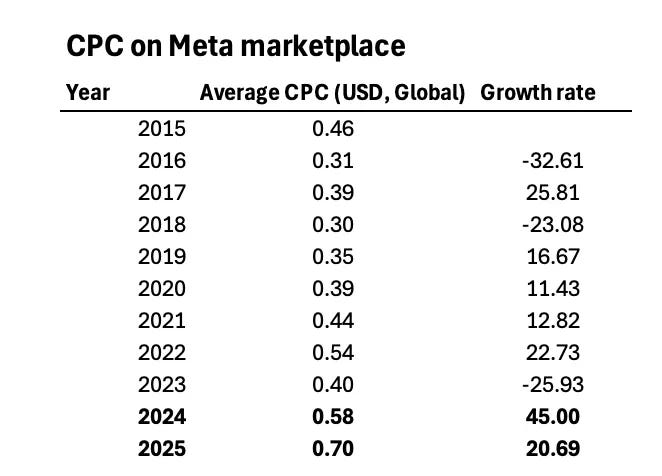
However, this likely results in a worse product for advertisers if impression growth stagnates.
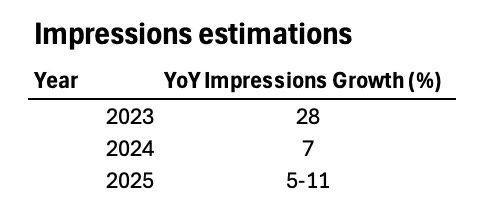
This generation issue is severe and could eventually disrupt the growth of Meta. This increase risk to the downside, reduce the margin of safety, and it should be reflected on the price multiples.
While this generational problem is true, a worst problem emerge.
Users interest in privacy is in all-time high
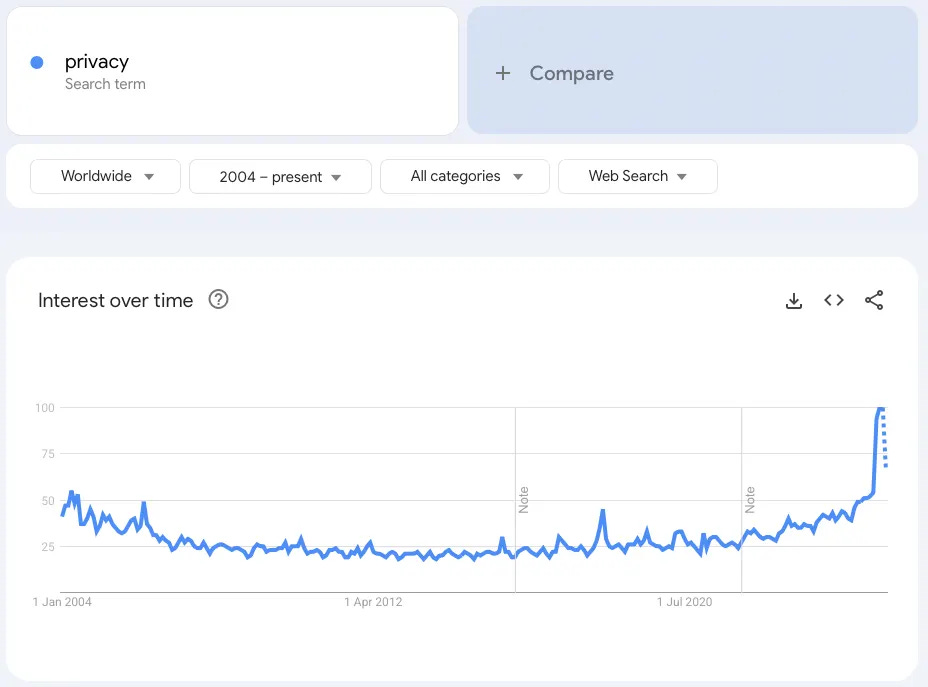
To run proper social media application is required trust. In a world where the users value privacy, the applications should provide the trust required for the user feel safe inside the application.
Meta applications are in the worst spot possible. If a privacy push doesn’t emerge, Meta will eventually be out of the market, fighting against the user preference to privacy.
Since 2004, Google trends shows a 20 year up trend in privacy interest. With a massive growth after AI/LLM boom era. Users feel unprotected regarding AI and data usage - sensitive data was and has being used to feed AI without “real” consent. Users feel betrayed by the applications. It gets worst when this involuntary feed hurts their confidence and their ability to work (real or perception).
The increase of privacy interest unlocks a bigger problem for Meta - where users need to communicate and interconnect over the internet, they will select the application that better handle their information. And Meta applications are on the worst position possible.
To value this privacy issue, I used the same model in three distinct LLMs to build a trust score proxy regarding privacy. All three LLMs reached the same conclusions. Facebook and Instagram are in the worst place possible, only above Tiktok - where Tiktok is own by a Chinese company and are in process to be acquired.
Users trust Telegram more than WhatsApp;
Users trust X over Instagram and Faceboook;
Users don’t trust Tiktok.
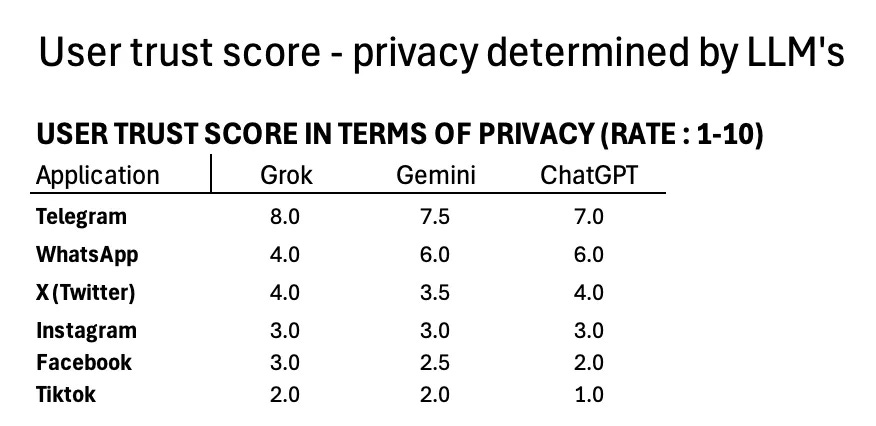
As privacy becomes paramount, users will shift to trusted platforms. (TikTok can potentially reverse this if acquired by a US company, that follow this issue properly) However, this landscape allows a new, private social media application to succeed. Meta cannot sustain users while being behind on the privacy frontier.
All forces are pushing Meta products down, ending the social media super cycle for Meta.
To fight this forces, they will force to spend more capital to acquire new users. As more capital are spent, it will hurt earnings. As they increase the CAPEX to also be in the frontier of AI, it will hurt earnings. All moves hurt earnings.
Without a revenue growth supporting these necessities, they need to charge more and more volume deteriorating the user experience aggressively.
Unless something big happen, Meta multiples have only one way to go → Down.
Price multiples must adjust to this 10year outlook. It can not be the same as it was in 2020, by any reason.
This environment opens the door for the “Walled Garden”.
Apple social media application
Apple’s move toward privacy is sustainable and trusted. They are well-known to protect the privacy of their users, by controlling both the hardware and the software of their ecosystem.
Using the same trust model, Apple’s ecosystem scored 8.5, compared to Telegram’s 7.5.
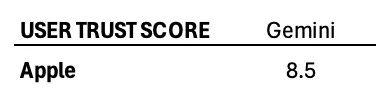
Apple is the owner of iMessage, a message application that holds 1.4b MAU, by leveraging these privacy unique prophecy and the 1.4 billion users on iMessage Apple could unlock a superior social media application.
A robust, private network from Apple would disrupt the social media market.
This is speculative, but the probability is non-zero.
If Apple launches a private social network, users from the US, Europe, and China may migrate rapidly. This could double Apple’s value while collapsing Meta’s moat. Automatically increasing the value of the network.
Thanks,
Joao