The Long-Term Thesis
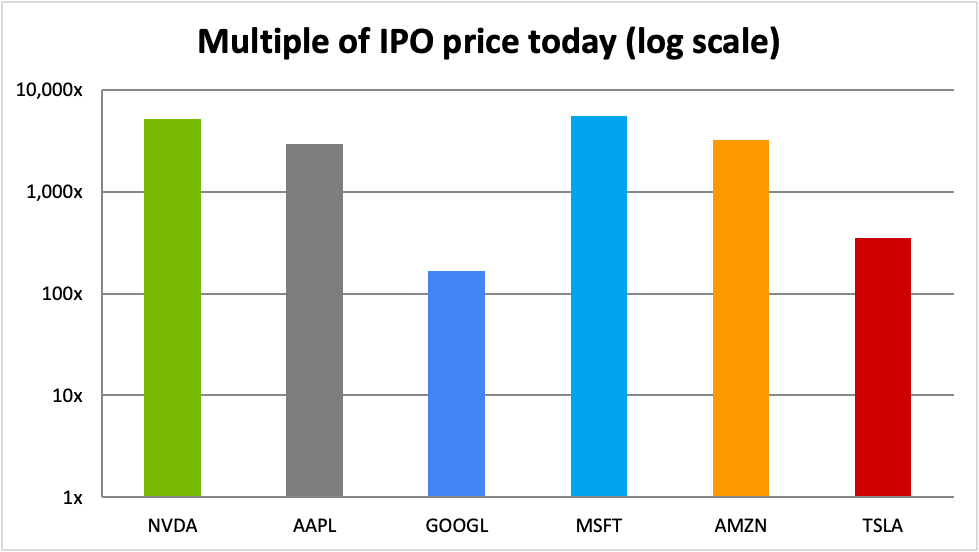
I am not questioning the destination. In 20+ years, SPCX will be the first $100T company, which would officially make it another 10x from the IPO price.
How to Enter: Staged Allocation, Not a Single Ticket
But conviction is not a plan, so for an honest analysis, let me bring some data. It is unquestionable, beyond any doubt, that VC, insiders are selling at this IPO price. Not EXITING, just diluting a little, as a rational person would. The sophisticated investors also agree that, at this stage, buying everything in a single ticket on day one is not the right approach. Markets are expensive.
The plan should run on a 3-year time frame, allocating a portion each year. Maybe you buy 25% now, so you are not completely out of the market. But don’t put 100% of your cash into public tech stocks with the current markets.
Do Not Expect an Overnight Double
There are massive multiples in these specific, well-selected stocks.
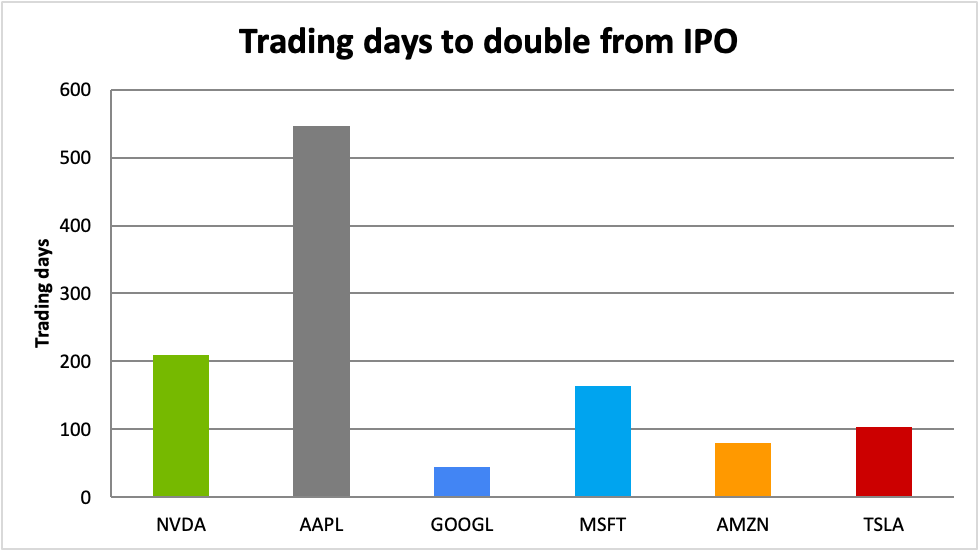
But let us be clear: they will not double overnight. Those were different markets, and even then, nobody should buy an IPO expecting it to double in a month. Apple was the slowest of the six, taking more than two years to double (consider roughly 250 trading days per year).
Trading Below the IPO Price Is Normal
Do not get overexcited. Four of these six stocks traded at a discount to their IPO price at some point. So there is a high probability it will happen again, and it is fundamentally justifiable. Apple traded 50% below its IPO price. That said, do not expect deep discounts to the IPO price either.
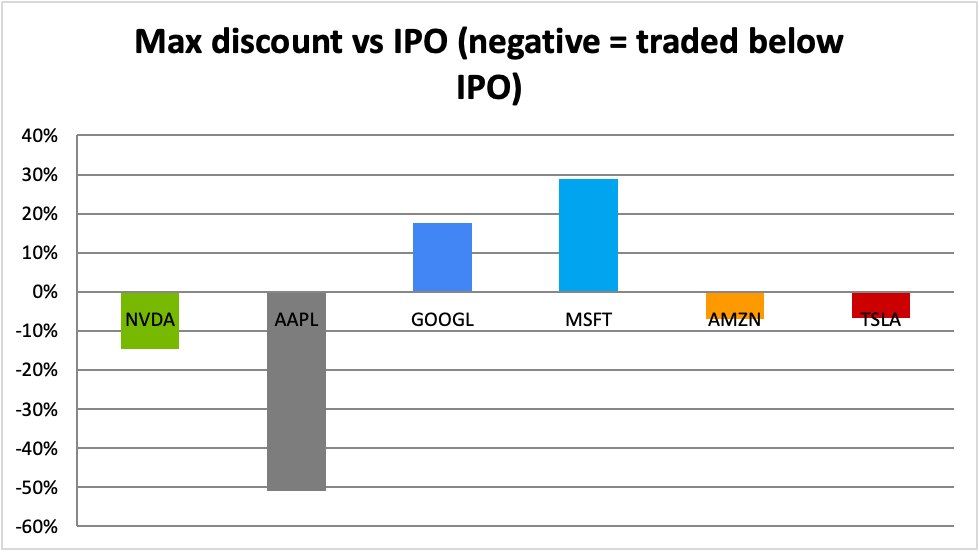
Recovering back above the IPO price usually does not take that long, although it can stretch into the hundreds of trading days, as it did for Apple, or almost 100 trading days in the case of Nvidia.
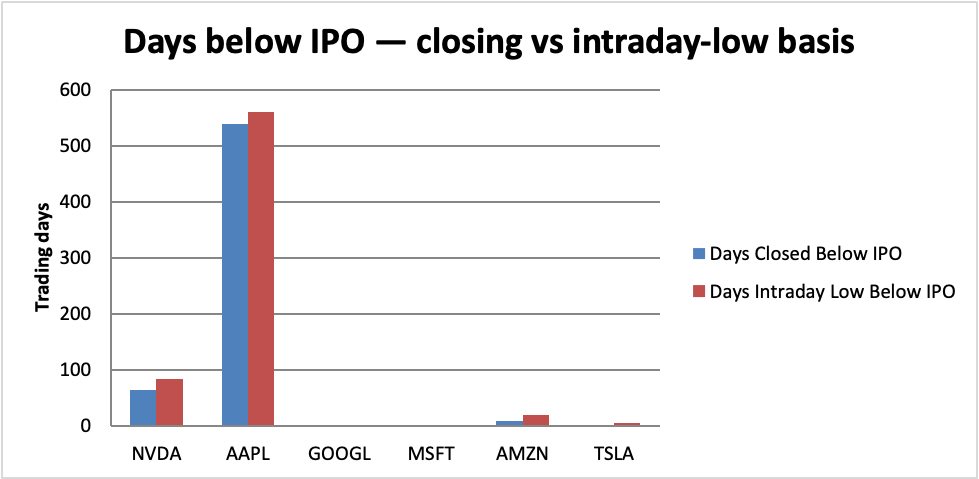
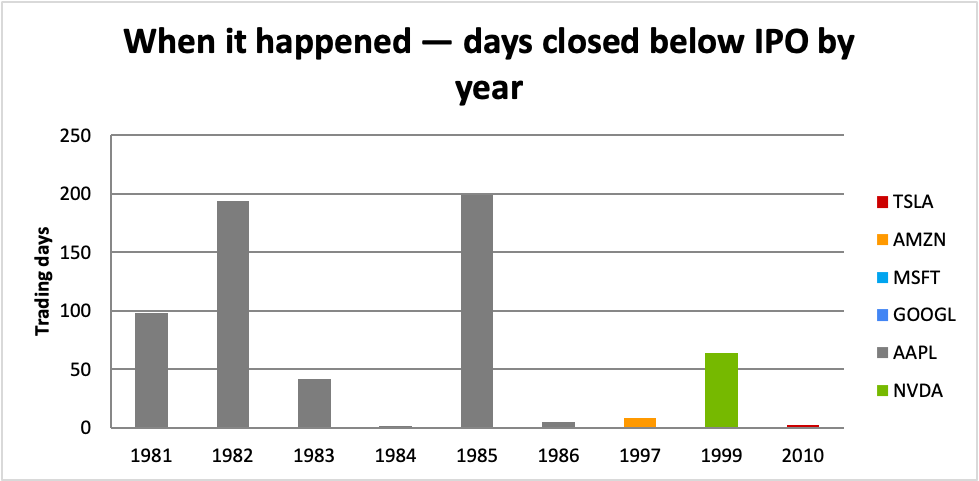
On a positive note, markets are becoming more efficient. There are fewer mispriced opportunities, and retail investors are more active. Looking only at these six stocks, the number of days closed below the IPO price is lower today than it was in the past.
Drawdowns Are Part of the Ride
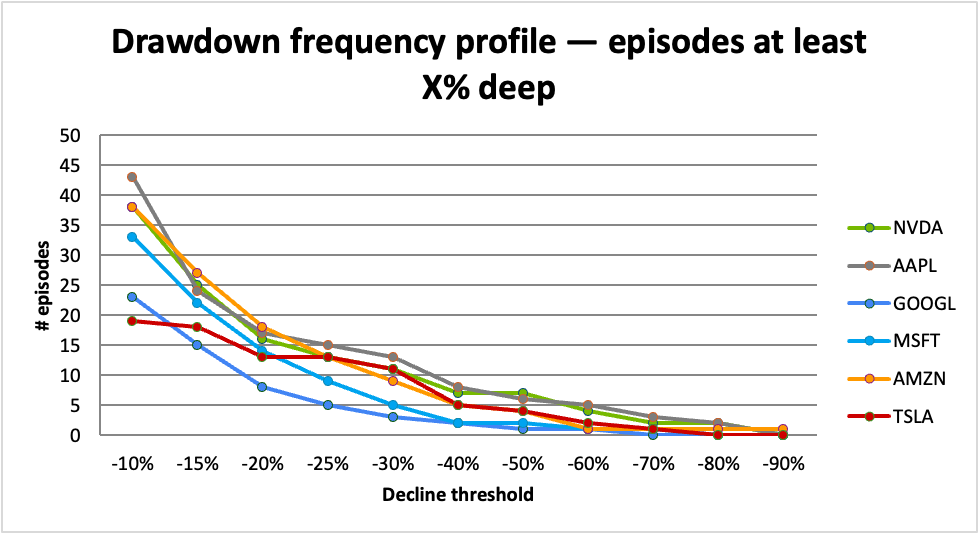
Over the years, these stocks traded at huge discounts many times. Be prepared to take -25% and -50% drawdowns. This is a roller coaster, not a straight-up money machine. Be prepared to accumulate at the bottoms and the discounts, not to sell into them. On average, each of these well-selected stocks traded 25% below its local high more than 10 times. For -50% drawdowns, the average is 4 episodes per stock, which is a huge number. Be prepared to accumulate at those bottoms. Think of them as Black Friday periods: they are not frequent, but they happen, and they happen multiple times.
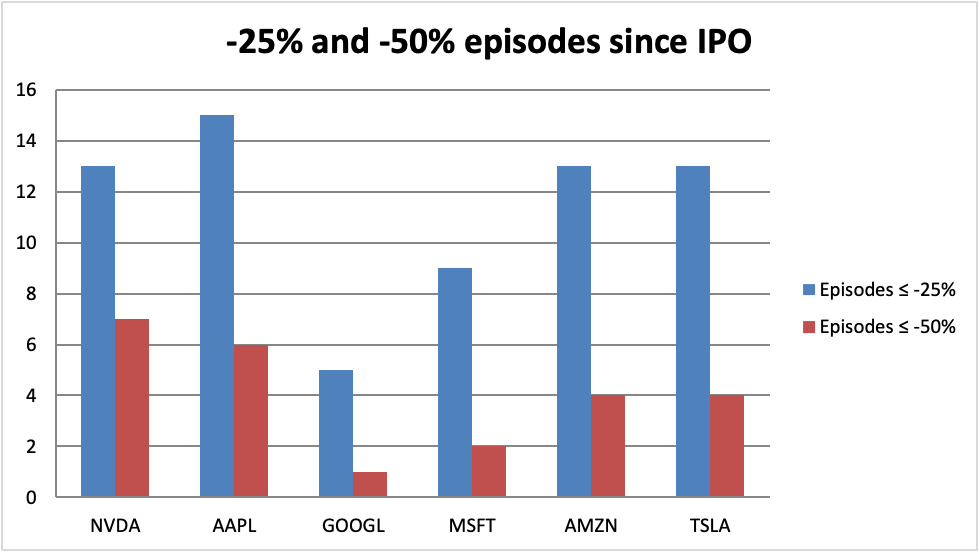
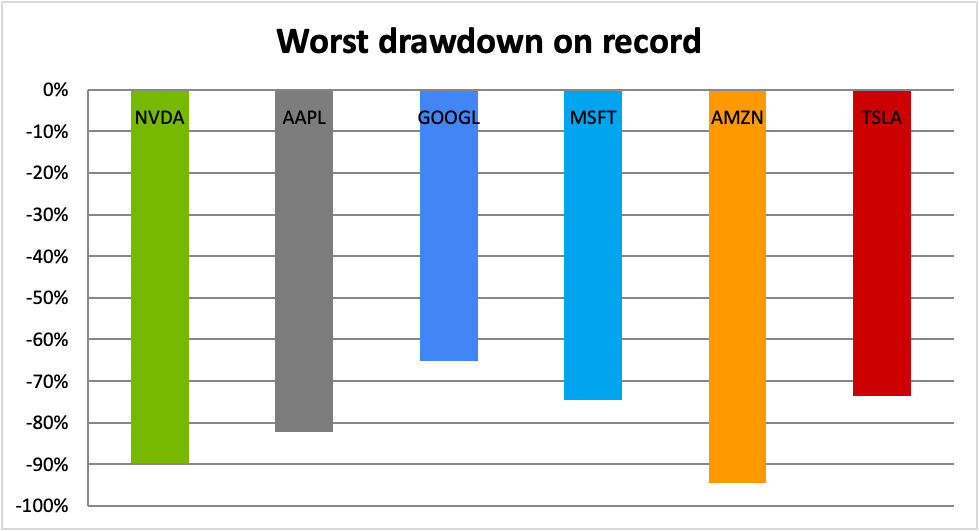
Even deeper discounts are possible. Be prepared for massive falls. They have happened before. Not often, but over a 20-year holding period, the probability of facing a Black Friday event is enormous.
Be Contrarian When the World Sees the End
This is where professionalism and cold blood are defined: the ability to accumulate and buy these bottoms. In those periods, the media and the world usually feel that “the end” has arrived. Be contrarian on these massive swings, and prepare mentally for them in advance.
Recovery Takes Time, and Patience Pays
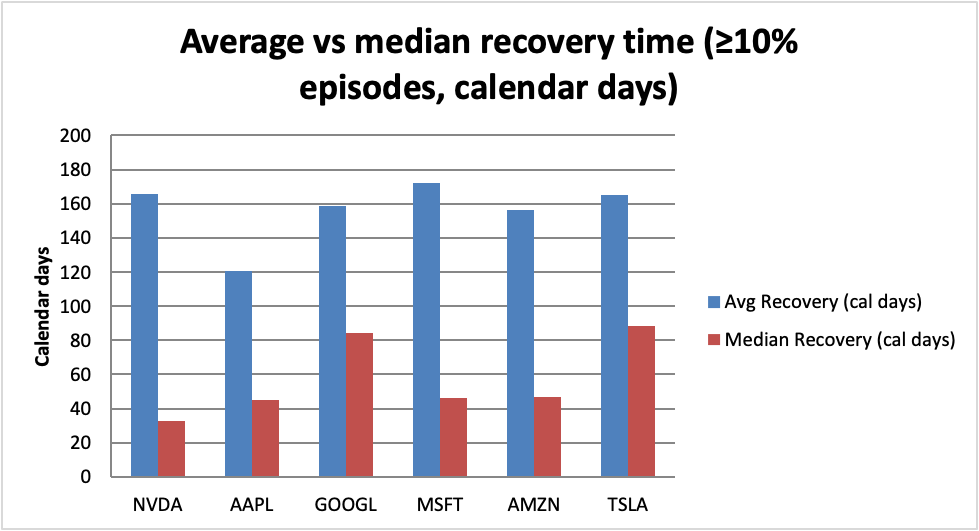
For good companies, the recovery happens. In the long term, the stock price always reacts to the fundamentals. But it will not be immediate, and this is where patience pays off. The average recovery from a bottom back to new highs is over 150 trading days, meaning more than six months to recover the entire pullback. These are not overnight gains. They are long-term oriented gains.
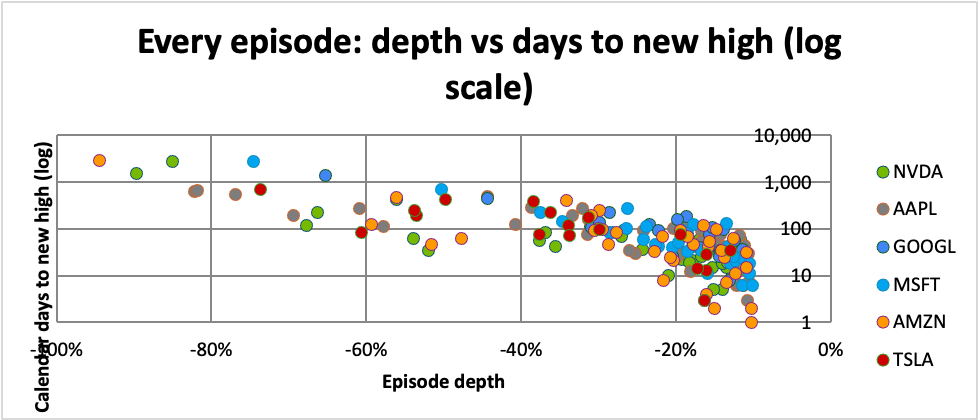
And as expected, the harder the episode and the worse the dump, the longer it takes to recover the full price. Aggressive V-shaped recoveries happen mostly after shallow drops of around 10%, not after collapses of 50% or more.
The Race to Double
The roller coaster is real. Do not assume a straight line up. Historically, there were multiple drawdown episodes on the way to doubling the stock price. Google is the outlier here.
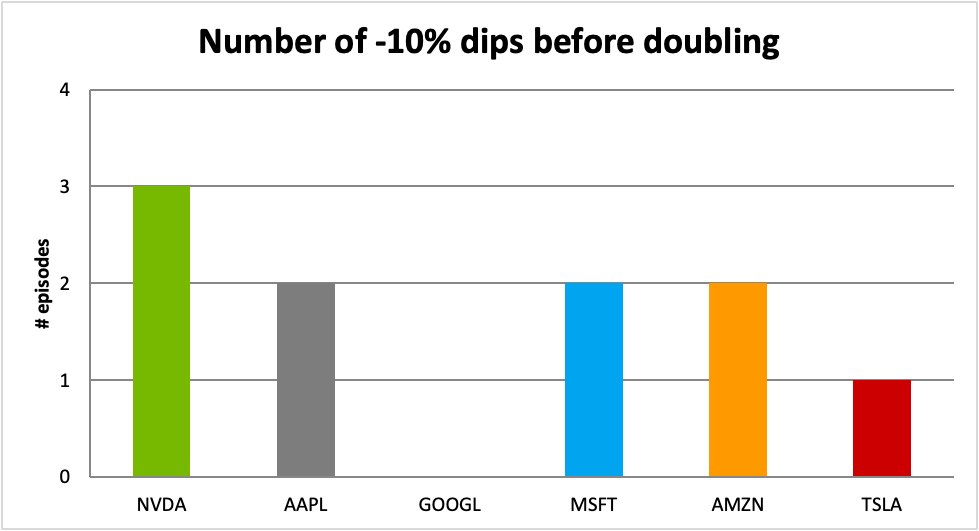
Almost all of these stocks declined more than 25% before reaching 2x the IPO price.
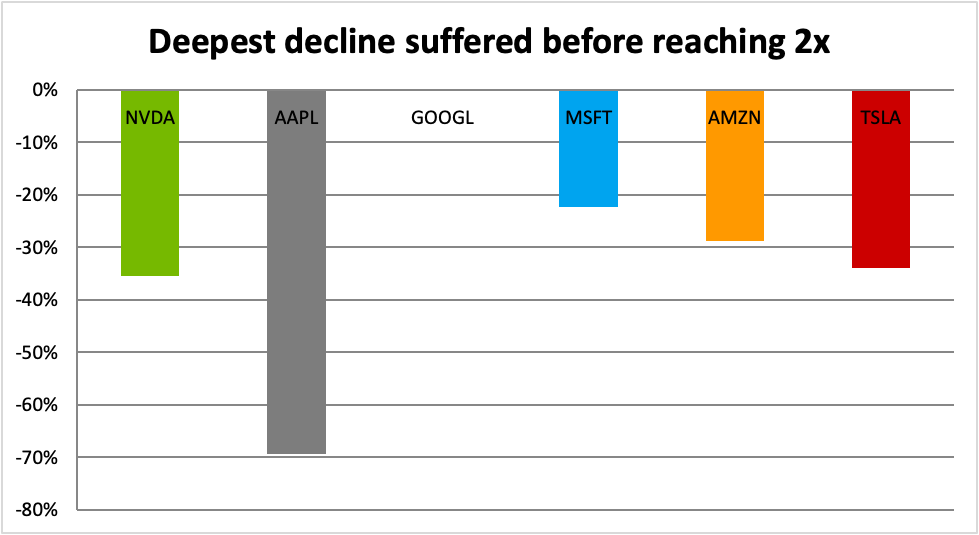
That said, the race to double is highly dependent on the company itself, and it is not correlated with the IPO year. Older companies did not take more time to double than the most recent IPO stocks.
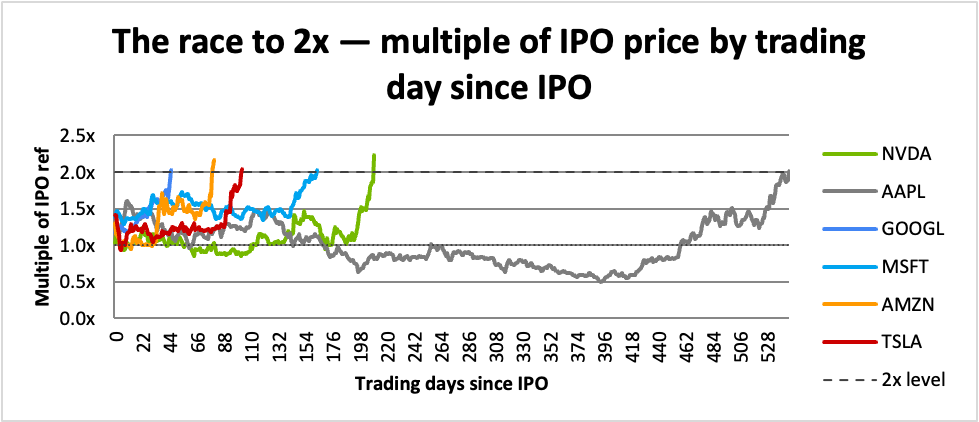
The multiples are different
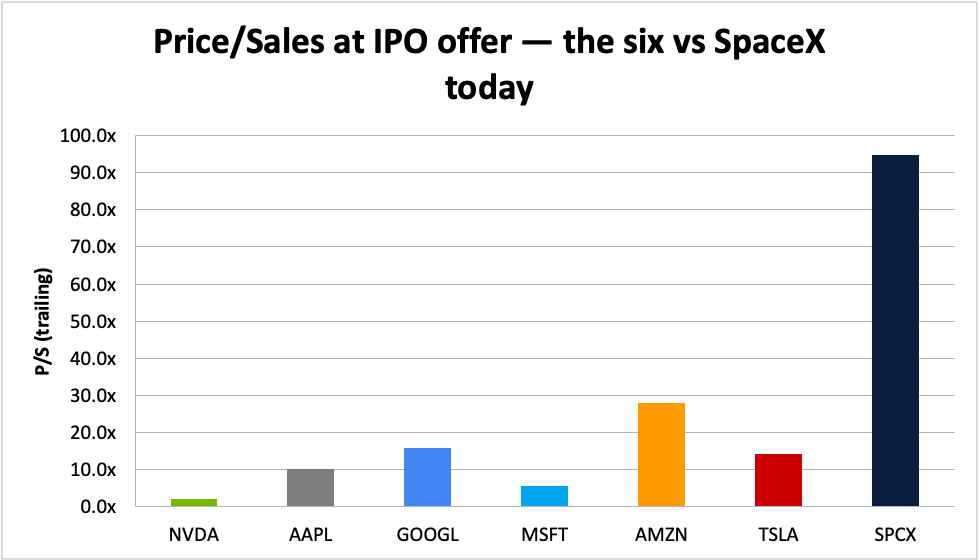
The multiples are relevant, and SPCX is pricing higher, above all peers. Be aware of that.