

The entire market is filled with AI doom, but this is both common and natural. This sentiment highlights a critical point: we are undergoing a massive technology shift toward a huge, important, and inherently good technology. Of course, every shift of this magnitude creates beneficiaries and those who suffer.
While there are many economic points turning the near future bearish, the “doom threats” often ignore the AI bull scenario I described in what I believe is my best article: Is AI Going to Fire 72 Million Americans?. There are natural limits that prevent a short-term implosion of the cycle; specifically, the build-out is neither free nor cheap. While technology will eventually push prices down, it will take longer than the one-year timeframe mentioned by Citrini Research.
I bet the majority of these “doom” writers haven’t even tried to build an intelligent application running with an intelligent AI model to feel the literal costs of building it and running it. That being said, there will not be “zero” job losses. Like any technology shift, this is highly correlated to job losses, job adaptations, and a new era. I was early to this thread in another article: Technology Shifts Disrupt Employment. But to be honest, especially being in crypto, I got as caught up in the madness as everyone else.
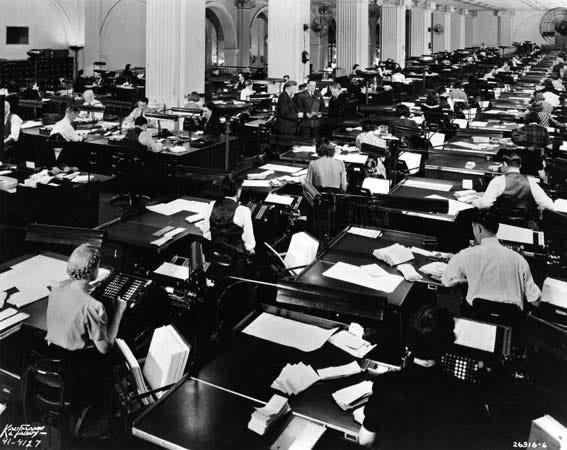
To understand where we are, let’s go back to the era when “computers” were people, not the machines you are comfortable working on today. At that time, the smartest minds were the computers. If you were brilliant at calculus, you became a computer. The system was filled with expensive, smart people, and because the work was hard, it took them a long time to calculate what a small calculator can do today in 0.00001 seconds. These people didn’t disappear when computers became machines; they became smarter.
SMART PEOPLE + TECHNOLOGY = SMART^2
Because technology can handle the tasks humans used to spend time on, we now have free time to do better things: improve the hardware, refine the machines, and innovate.
Free time leads to new opportunities.
There is no reason to think this time is different, as there is nothing to show that today we can infinitely scale without limits. Back when the first calculators appeared, they moved only the “smartest of the smartest” to work with the machines. They were better, but still had room to improve. The rest shifted jobs or learned how to work alongside the technology.

As machines took over the title of “computer,” humans found new purposes for them. Computers stopped being mere calculators and became much more. Again, there is no reason to think the world is “cooked” this time around. As we create more free time for the smartest brains, they will invent even more innovations. Each critical innovation brings a new exponential curve to the future.
This is why I find the Citrini Research prediction of a catastrophic event next year so unrealistic. They predict a financial collapse, but they also expect the market to wait for the collapse to happen. In reality, if every major player believed a major recession was coming next year, they would withdraw their capital from the markets today. That leads to a recession in financial markets first, followed by the economic collapse. Everyone—even the “dumbest guy”—would withdraw today if they had confidence in a tomorrow-collapse.
Realistically, that was the market reaction we saw yesterday, after this paper was published. It sounds too obvious to be true, but history shows the market usually peaks on euphoria—when everyone agrees we are in a boom. Today, AI fear and market fear are at unprecedented highs. Some might argue that wasn’t the sentiment a few months ago, and I agree. When AI was new,capex spending seemed limitless, and the political sentiment was highly positive, that could have been the top. Today is the continuation of that bear market.
However, I don’t agree with the end of the “AI boom” era. Brands, communities, and applications will keep their moats among the 7 billion humans on planet earth. Within the “crowd,” there will always be brands people want to have for status or irrational reasons. Look at mechanical watches: they are less efficient than digital ones, yet they remain costly status symbols with no utility other than telling time. Applications will keep their moats; of course, I don’t know each ones, and if new ones will beat the oldest ones in the face. But that’s capitalism, that’s competition.
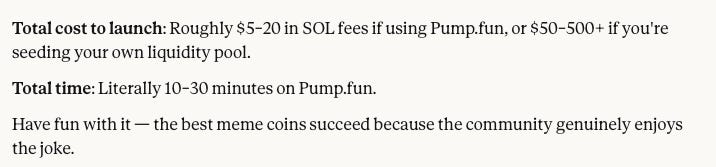
Agent commerce will drive this next phase, and the “agentic world” will find scale. But this doesn’t mean agents won’t use the most efficient, simple, and cheap ways possible. For example, claude LLM recommends memecoin launches on Pump.fun, justifying exactly with our criterias. And people keeps thinking that the $1.2b TTM fees will go to zero tomorrow without any clear evidence, sounds unrealistic. This “software fear” actually brings opportunities, especially in long-tail tokens. PUMP is trading at the lows and I keep holding it until business indicators prove me wrong.
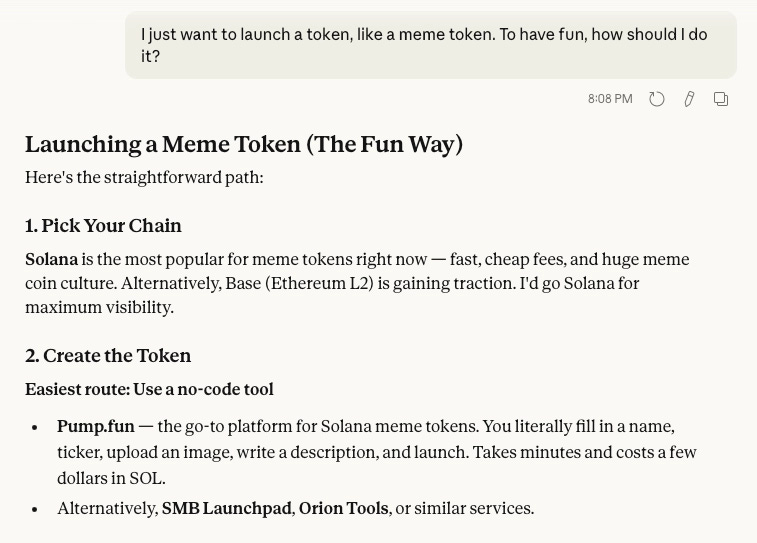
If you don’t believe me, test it.
If trading perps and financial assets are done by agents, they will be much more active. But as technology becomes commoditized, arbitrage goes to zero. If financial agents become mainstream, trading without a discretionary approach becomes a commodity. Agents will trade frenetically, but because they are hyperbolic thinkers,they will change their opinions as fast as we breathe. Any data point will force them to over-trade, eventually making them fee-consumers with negative profitability. The winners here are the exchanges—especially crypto perp exchanges like Hyperliquid—which offer the products these agents love to trade.
Eventually, the real edge will belong to the patient: the researchers and investment believers who don’t sell and never die. Those will beat the agents. Agents will commoditize short-term trends and assistant jobs, taking us back to an era where you participate if you have capital. There is no reason to be an “analyst” if an agent can fill that gap; you instead become a money manager for your own capital or those who trust you. Edges will keep in the same ones, Warren Buffett style investors.
Stablecoins and vaults are the two key areas that will bring the inflows—the “liquidity stimulus” for our machine. We must keep growing this pie. As we do, crypto will not just survive, but thrive. Organizations have every incentive to bring people on-chain via stablecoins because they reduce the friction to participate in other crypto economies. Making the pull is simple, and eventually, it becomes inevitable.
This is intended to be a thought exercise, and not financial advice. Reach out in open conversations, DM me or comment anytime.
I’m aiming to provide clarity about the world day-by-day, and I hope you get smarter and more financial intelligent every day. Each day we increase our chances of winning.
Thanks, Joao