

Writing this letter is part of my duty to our clients. But it is also a letter. And letters are meant to begin conversations. I hope this one does. I’ll be seeking out a range of perspectives, and I intend to spotlight some the meaningfully advance the discussion.
[Brief in audio format]
There is smoke in the atmosphere - a lot of smoke. It is the smoke of rockets reaching new lunar goals, Artemis II is now on orbit, and the smoke of missiles exploding critical bridges. The world is riskier than ever on earth; and if we cannot cooperate on Earth, it will be even harder to cooperate in space. Nuclear power remains the “bomb” until we have lasers from the moon, that vaporize everything on earth. On Earth, the dusty smell comes from ballistic missiles and a massive wave of internal unrest. Over 7 million people have manifested across 50 US states for “No Kings” Day, signaling the first sign of domestic conflict.
Building on this instability, we have one thing clear: Iran is a bucket of problems.
For the US, it is an internal conflict where the population and the President are misaligned. For Europe, it is a reminder of the disastrous energy policies of years past. In Asia, it is a matter of complete dependency on a volatile region. Within the Middle East itself, wealthy nations that have grown enormously are now surrounded by “crazy neighbors” who are blowing up facilities and headquarters. This violence is annihilating tourism and threatening to destroy years of economic progress. For these nations, it is a massive step back.
Because of this deterioration, there are few solutions left. The Iranian regime may eventually be stopped by force—thousands will die and the straits will be controlled, in good faith or bad. While Europeans try to onboard peace and stabilization, this only happened because they still remember WWI and WWII but also because they were threatened by Iranian long-range missiles that cover nearly every country except Portugal. China, Russia, and the rest of Asia will inevitably be involved. Russia, in particular, will escalate Ukraine tensions; they have the money, despite being hit hard by Ukrainian drone technology and direct attacks on their energy storage.
This escalation in the Iranian and Ukraine war means energy in Europe must be solved through massive investment in internal capabilities and war technology. Europe must increase defense spending and adopt “freedom energy” policies to build internally, otherwise, we are screwed by geopolitical shocks every four years. Simultaneously, US internal conflict is hitting a breaking point. The March 28 “No Kings” Day reached a historical number of protesters—over 7 million manifesting against Trump, the Iran war, and ICE. This aligns perfectly with Ray Dalio’s “Changing World Order” theory: in the late stage, discrepancies between the “haves” and “have-nots” grow, internal conflict spikes, and military spending rises to protect fading power. We are seeing all three.
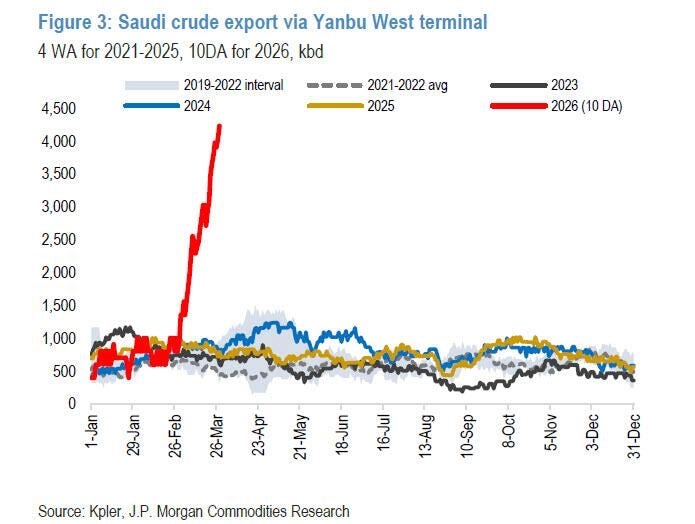
The Houthis have now joined the Iranians, cooperating on missile launch programs. This is manageable until they act on the Bab-el-Mandeb strait. Eventually, they will force a choke point at this critical location, where Saudi Arabia’s Yanbu export hub recently reached a 7mmb/d capacity. This is a direct threat to the Saudis, who moved operations toward Yanbu to avoid the Strait of Hormuz. If the Bab-el-Mandeb is closed, Saudi Arabia—and potentially the UAE—will be forced to join the war.
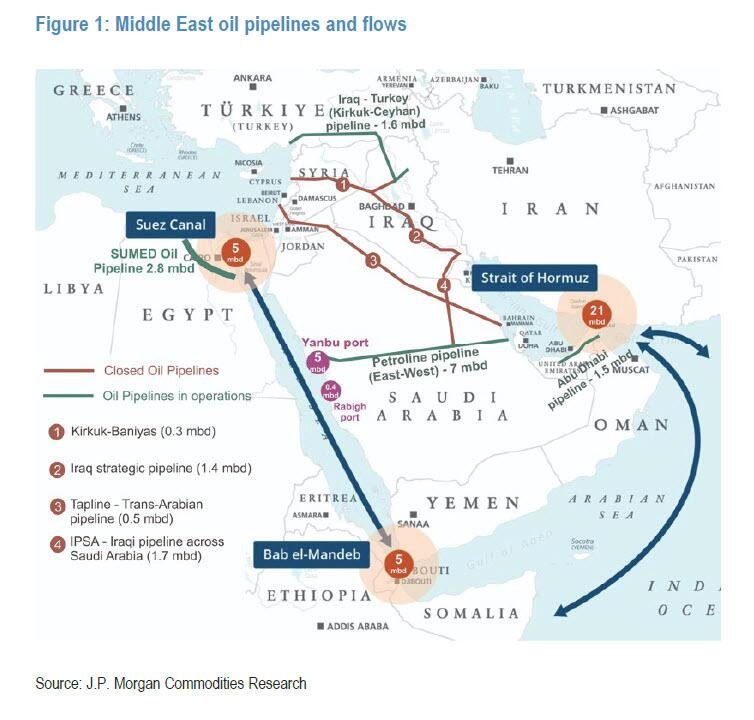
We are in a state of political disconnect that has pissed off the world. The Iranians are not “winning,” as they are losing infrastructure and oil facilities, but America is not winning either. The winners are China, Russia, and North Korea. The clear losers are Iran and Trump. No one is supporting Trump’s policies or the arrogant, direct way he navigates these shocks with clear lies. It is Nixon’s story all over again—1969, the Vietnam War, and a president losing his grip. While Trump family stays rich, the American nation stands to lose power depending on the next president. Markets no longer believe Trump; even the US intelligence community is out of alignment with his discourse. Instead, markets are watching Iranian, European, and Chinese media to understand the war’s true stage. Trump claims a deal is close; the Iranians deny it and intensify their missile strikes. The markets believe what they see, not what they hear.
This leads to a critical point: the US will not agree to the Strait being closed to them or Israel. While the US claims their goal was merely to obliterate nuclear capabilities and military power, they continue to bomb critical bridges inside Iran. The only way out is escalation until troops are on the ground at Kharg Island and the Strait. I assume a significant probability of a long war—longer than anyone expects. NATO involve, eventually. Trump doesn’t just want a “clean” Strait; he wants clean Iranian oil and eyes on what China is consuming. They want to bring onboard China, forcing them to buy at prices that the rest of the world is buying, a fair competition for growth.
As the US escalates and Russia acts as a middleman (while supporting Iran), the conflict becomes a mess of frontiers. We will see thousands of soldiers die in a war that will not end in two weeks. This drives a massive spike in oil prices—consistently above $100 and eventually $150. Consider the consequences for CPI and monetary policy. At $150 a barrel, CPI will react aggressively, likely staying above 4%. A recession and a deterioration of the labor market are predictable.
The main question is how to position for this stagflation. In a high-inflation scenario where AI is disrupting jobs, you do not buy long-term US or European bonds. You park capital in physical metals—gold, silver, or uranium. You hold “boring” companies: energy, consumer goods, or you hold “elite tech” like Google and Apple by shorting a basket of other non-elite tech stocks (I guess). Meanwhile, SpaceX is coming live soon and will suck huge liquidity from the markets.
Despite the chaos, I believe Bitcoin has a lower downside than upside here. Buying below $70k is a blessing. In a war scenario, governments must print massive stimulus to support the military and consumers while hiking rates to fight the inflation they are creating. It is a recipe for disaster. With debt at extreme levels and the USD declining to maintain industrial competitiveness, Bitcoin becomes the primary hedge.
My thesis is clear: a short-term bullish move for Bitcoin driven by conflict, reaching $150k in 12 to 18 months. However, I am bearish mid-term (18 to 30 months) due to the “quantum risk.” Until we are sure how to upgrade to quantum-free tokens, big institutional capital and pension funds will hesitate to hold for ten years. Once a solution is developed and the “quantum relief” begins, we will see the final rotation from gold to Bitcoin as the world’s reserve asset.
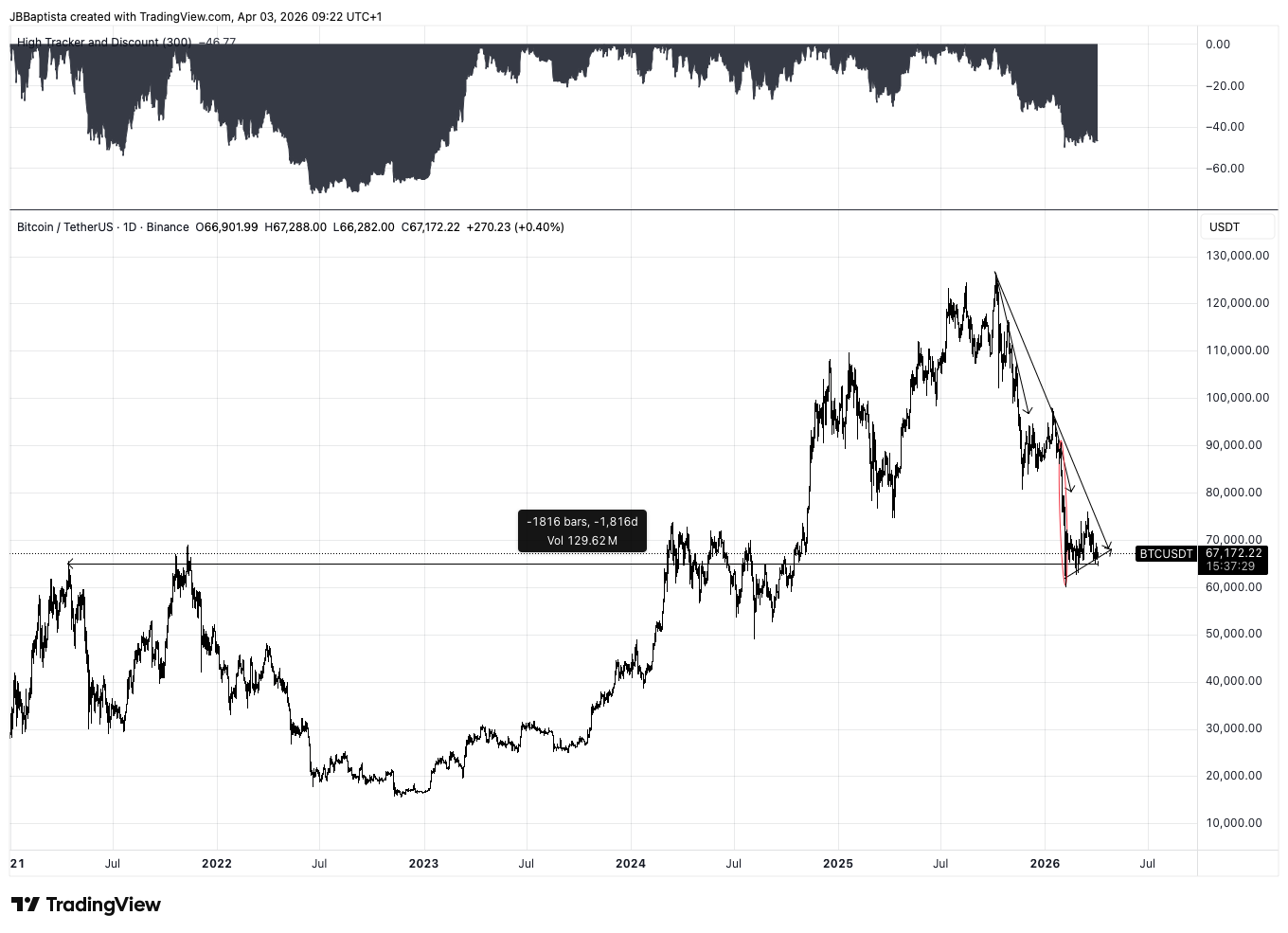
Ultimately, Bitcoin is trading at the same price it was 1,816 days ago. Think of how much technology and industry have improved since then. Your tokens are safe; it is only the price that is currently insecure.
This is intended to be a thought exercise, and not financial advice. Reach out in open conversations, DM me or comment anytime.
I’m aiming to provide clarity about the world day-by-day, and I hope you get smarter and more financial intelligent every day. Each day we increase our chances of winning.
Thanks, Joao