

Writing this letter is part of my duty to our clients. But it is also a letter. And letters are meant to begin conversations. I hope this one does. I’ll be seeking out a range of perspectives, and I intend to spotlight some the meaningfully advance the discussion.
[Brief in audio format]
Trump loves to brag, but it’s working against the US this time. Operating with a massive ego, he enforced the power of the US by starting a tariff war. Other countries didn’t appreciate it, but they were forced to comply and embrace Trump’s power, fearing what could happen to them if they ended up on the wrong side of the US. Trump have consistent claimes that the world is taking advantage of US, the mother nations, fueled by China growth threats, creating friction to maintain and grow the US dynasty and attempt to revert the follow world order so they could remain in power. Claiming victory and bragging about “Great America”—Europe, Latin America, and Asia all kissed Trump’s feet and let him win.
But Iran is different. Iran has hated America since 1953, when the UK and America worked together to reinstall Iran’s monarch. That event cemented the US in Iranian eyes as an imperialist power willing to crush their democracy for economic and geopolitical interests, specifically with Iran’s oil industry being controlled by the British. This animosity deteriorated further during the Iran-Iraq war in the 80s. This long-held hatred wasn’t just a radical phase; it stemmed from feeling suppressed and being forced into regime change simply to favor US interests. Now, they hate Trump even more. They will do everything to damage his governance and ruin the world’s positive perception of his mandate.
And Iran is no longer what it used to be. They have a huge arsenal of missiles, bombs, and drones. They have—or had—potential nuclear weapons, they have oil, and they control the Strait of Hormuz. Furthermore, they possess a radicalism and a religious mission completely contrary to the rest of the Western world.
I believe the war wouldn’t have reached this stage if Trump hadn’t publicly bragged. He bragged so much that it pissed off the Iranians and the rest of the world right when everyone was already suffering. Capital markets are suffering; European and Asian consumers are suffering. This is killing America, rapidly scaling global disillusionment and ruining the good perception of the US. This happened even when the US ultimately had no other option than to attack Iran. The bragging was unnecessary, and now his ego is on the line. I remember, even before the war started, Iranians mentioned they would teach Trump a lesson, and I believe he is learning a massive one. Now, to stop the war, he has to lower his ego and invert everything he wrote in The Art of the Deal.
We are at the extreme end of the pendulum in a global war, and he has to pivot toward areas where a positive reaction is expected. The biggest problem for the US isn’t just the start of the Iran war; it’s that the world blames the US for starting it. Gulf nations, all of Asia, and Europe blame the US. While the whole world is suffering, Trump insists on bragging, and that has alienated everyone.
Consequently, we are seeing a massive shift. India, which bought oil from Iran, is now buying from Russia instead. China is buying from Russia; new straits, channels, and routes are being utilized. New currencies for commercial trade are taking over. People and nations are diversifying away from the US—from the currency of trade to the reserve assets on their balance sheets. After Trump’s first three months, the world is moving increasingly toward diversification, losing trust in US leadership.
This naturally pushes the world closer to China. European cars are basically just Chinese EVs now; open-source LLMs are dominated by Chinese models. Rare earths and minerals are controlled by the Chinese. Europe, doomed since WWII, is especially failing to wake up to the problem at hand. We are seeing European segregation across different countries, where some defend the US and others oppose it, which was massively transparent when it came to allowing the US to use military bases for Iran operations. Portugal did, while Spain was against it. These are two close countries with very different leadership. This escalation could lead to segregation by principle.
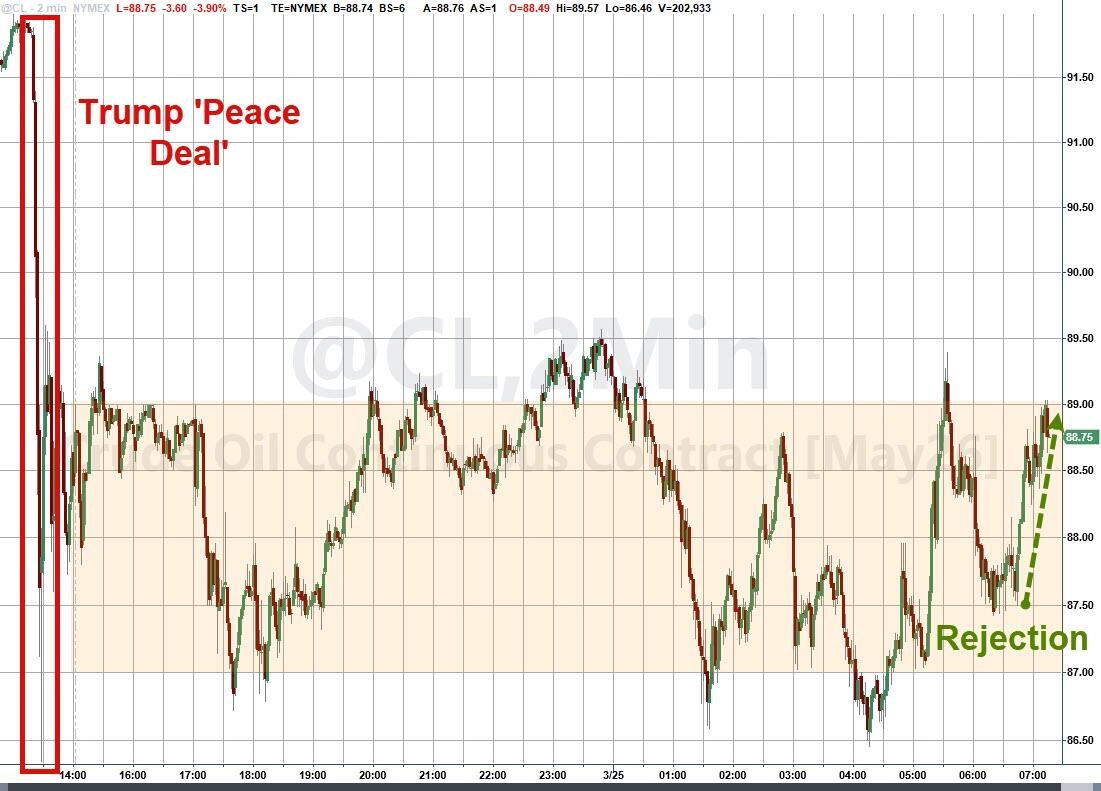
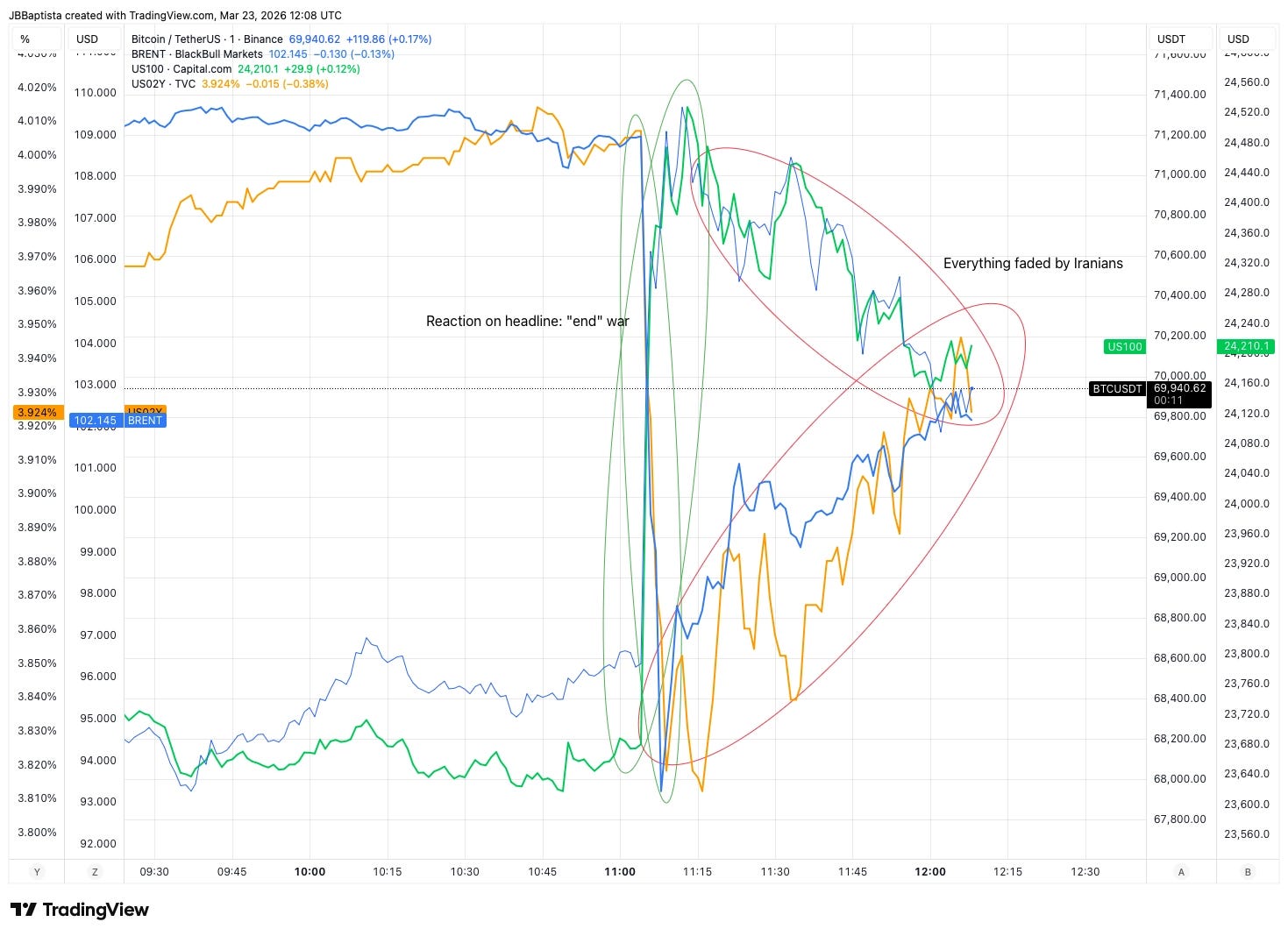
The world is starving for a transparent, simple, and more globally aligned America. Capital markets are always the proof of this: when America published a peace deal, the oil market reaction was extremely positive. The entire market react in a relief.
The State of the war
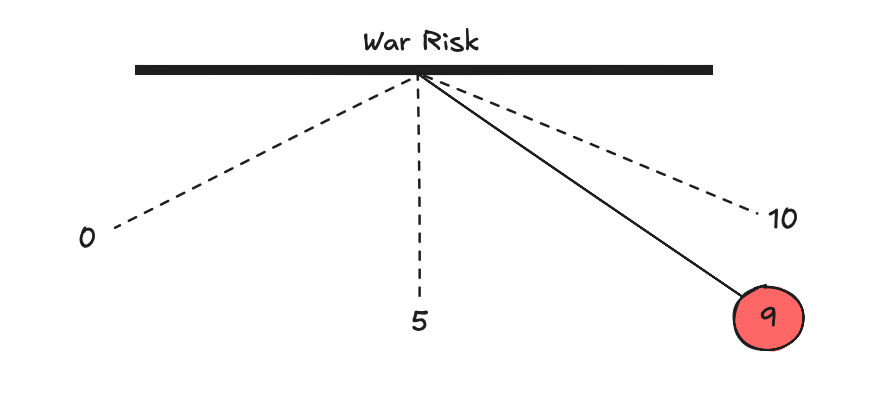
Yet, the actual state of the war tells a different story. On one side, you have diplomatic signals, with the US administration publishing a peace deal framework through Pakistan. On the other side, bombs are falling. Israel has dropped more than 15,000 bombs on Iran—four times the volume of the prior 12-day conflict. The IRGC has launched a new wave of attacks on Israel and US bases; Saudi Arabia intercepted a ballistic missile and at least five drones; and even Kuwait International Airport was struck in a fuel tank by a drone. While apparent peace deals are being arranged, Trump is simultaneously sending more troops to the Middle East, and Israeli forces are advancing another 8 km into Lebanese territory.
The 15-point peace deal was automatically rejected by Iranians, who countered with a 5-point ceasefire deal. One of their absolute conditions: international recognition of Iranian sovereign authority over the Strait of Hormuz. They explicitly stated they wouldn’t allow Trump to dictate the war’s timeline.
It’s clear where this war is heading. In my opinion, the Trump administration is just trying to buy time, knowing full well that Iranians won’t agree to the published deal. They want to show the world that they are trying to negotiate a ceasefire and play the peacemakers. Trump propaganda to be the peace president, but peace only in titles. Trump called “peace deal” when it was obvious Iran would reject most of the points, it’s just a facade. They know they are sending troops and bombing while pretending to seek a resolution.
However, this peace deal attempt was useful in one regard: it made the world and the US understand Iran’s primary objective. It’s not about access to the global oil system, or being an unsanctioned nation; it’s about dictatorship and sovereignty over the Strait. The Strait is their crown jewel, and with it—alongside the support of Yemen—they control all the Gulf nations. Trump and US allies will never accept that, which makes it highly probable that the war will escalate further and last much longer than expected. Almost 30 days in, we are looking at scenarios of escalation, not de-escalation.
There is a high probability of Gulf nations soon to join the US; Israeli troops are already on the ground, and the US keeps sending more forces to the region. Iran is warning that as soon as these troops are within range of their missile arsenal, they will fire. If that happens, they will undoubtedly kill or threaten to kill thousands of US soldiers in a flash. This would force the US to act Aggressively. We are in critical times, and the risks of this war are incredibly high.
This conflict doesn’t just impact oil; it drastically affects gas and fertilizers, with 30% of the world’s total fertilizers passing through that specific Strait. Without those supplies, there is an increase in fertilizer costs, particularly nitrogen. Without nitrogen, crop yields will inevitably drop, affecting consumer prices and leading to higher food costs. Rising oil prices, rising gas prices, and rising food prices, combined with stagnant economic growth, create the worst possible macroeconomic quadrant. High inflation lagging economic growth is the most challenging environment for policymakers.
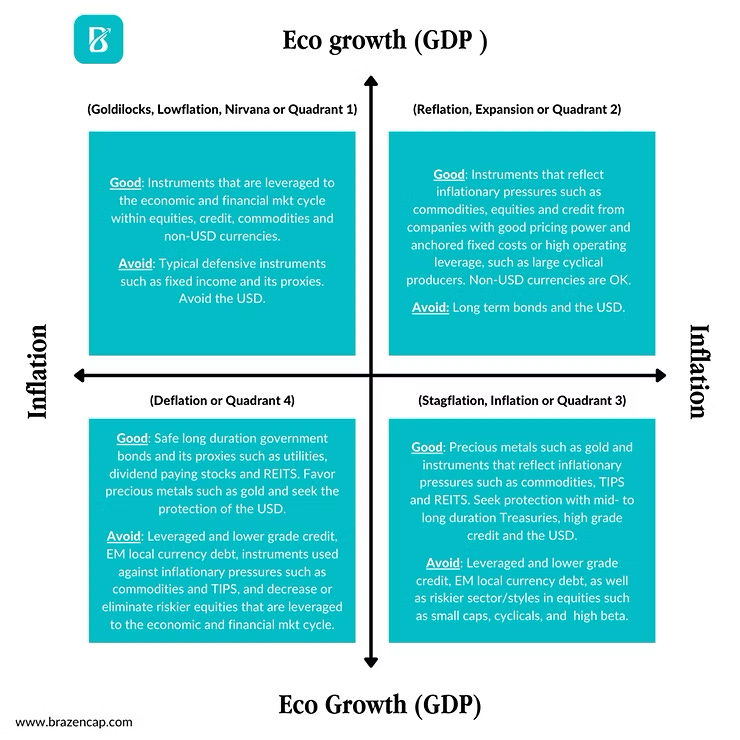
In the current situation, sustaining the war will eventually require the extreme printing machine to be turned on. However, with the labor market stable and inflation rising, central banks will likely keep rates stable for now. But in a scenario of extreme war escalation—where US troops hit the field and Gulf nations join the fight against Iran—I believe the ECB and FED will have no other option but to hike rates.
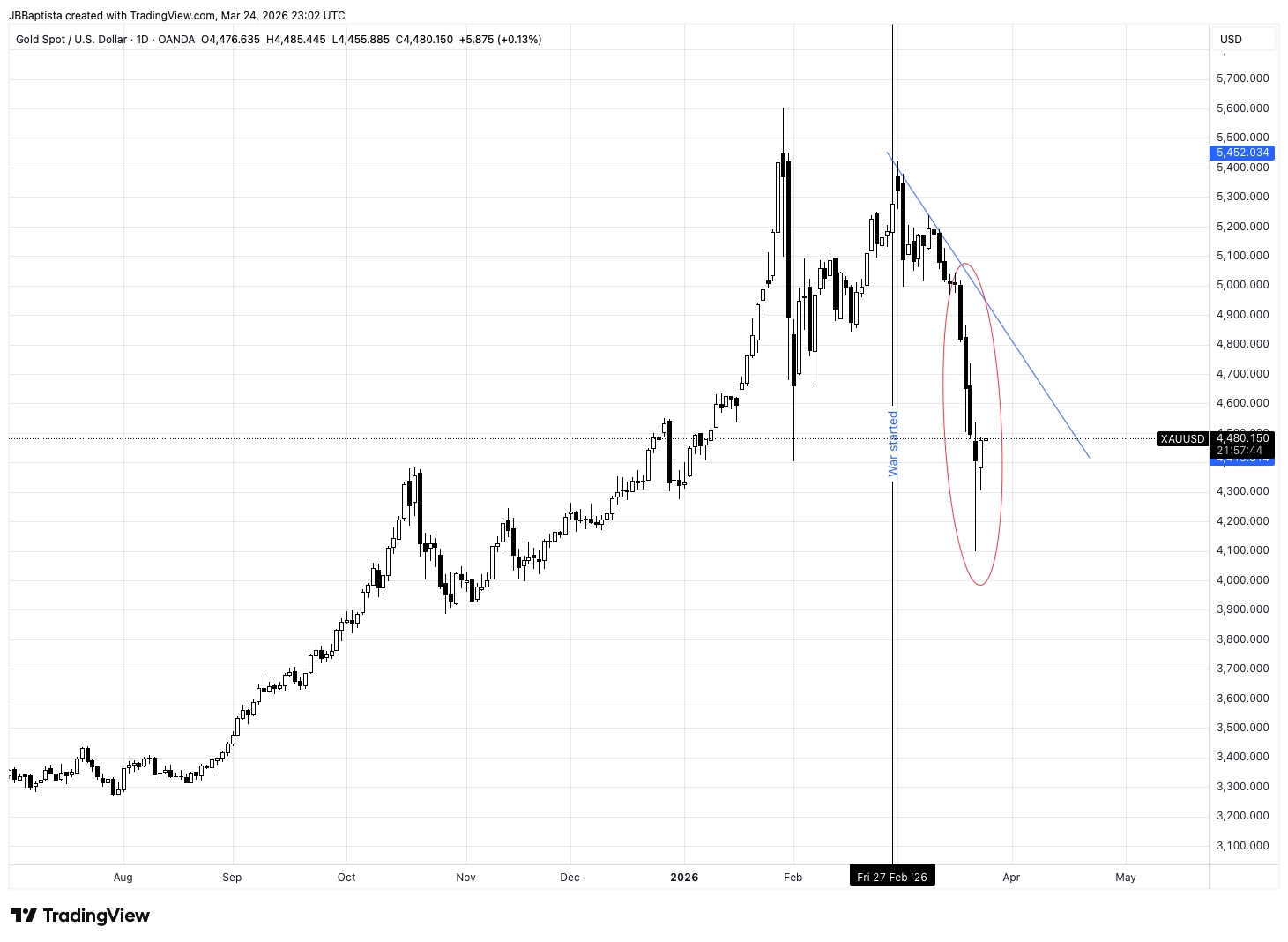
This macro backdrop is the biggest reason why Gold has likely bottomed. In a world characterized by a bifurcation from the US, currency instability, geopolitical chaos, rising inflation, and lagging growth, Gold is historically the only asset that offers true protection. Even if economic growth ends up exceeding expectations thanks to AI, commodities will continue to be a very solid instrument to hold. Bitcoin is also perfectly positioned here, particularly if the money printing machine gets turned back on.
But enough of war. Technology keeps bubbling
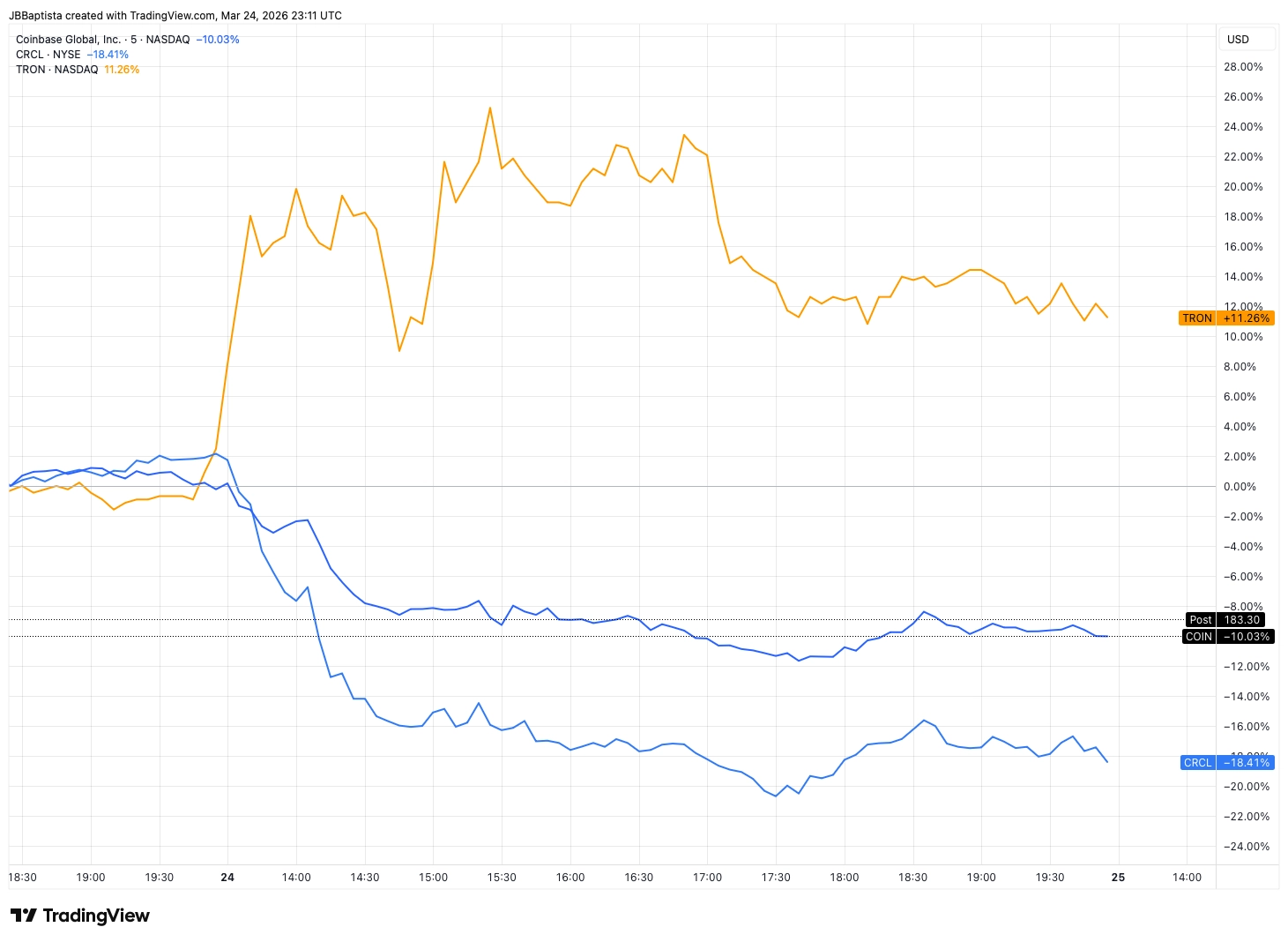
But moving away from the war, there are major shifts happening in the crypto space. We are seeing signs of a probable Clarity Act approval, and the initial reactions have driven CRCL and COIN down by 20% to 10%. The likely approval of this act will dismantle the reward system that previously allowed Coinbase and other exchanges to offer yield on their stablecoin holdings in the form of rewards. As soon as this bill passes, those incentive programs will end. This will reduce the incentives an exchange can provide to stablecoin holders, and the apparent banking win on this topic is what dumped CRCL and COIN.
At the same time, Tether is finalizing a massive US audit to compete directly within US jurisdiction. This increased competitive pressure pushed Circle down even further than Coinbase. However, while Coinbase is the real loser of this act, they still have customers who are there for the rewards and will eventually end up doing other stuff on the platform. They will simply lose their power to use reward incentives to attract new customers. Circle, on the other hand, will actually win by absorbing more revenue from interest rates. The ongoing war is indirectly helping them by keeping those rates high. The fundamentals for Circle haven’t deteriorated compared to three days ago; if you were a buyer of CRCL three days ago, at 25% discount you are a euphoric buyer now.
Beyond stablecoins, privacy remains the primary feature demanded by institutions, as transparent blockchains hurt their need for confidential work. The Solana Foundation is attacking this by presenting enterprise privacy features—allowing encrypted balances, zero-knowledge anonymity, and multiparty confidential computing. All of this is being done on layer-1 with built-in compliance at every level. This directly attacks the only edge that Canton had over Solana. With Solana taking the lead, I expect Ethereum and hyperliquid to follow suit. These public blockchains will soon commoditize any privacy features that private layer one options offer, lowering their competitors’ selling points.
Through all this volatility, the smart money is moving. Strategy keeps buying, Bitmine is also buying, and new funds have raised a lot of capital, liquidity is there ready to “eventually” be deploy. We are entering a convergent world of AI and Crypto. AI privacy is being unleashed through crypto projects like Venice, and agentic micro-payments are becoming possible with systems built on crypto rails like x402. We are also seeing new decentralized computing systems running AI, such as TAO.
While the token markets might be in a clear bear phase in terms of price performance and volume, the underlying business economics in crypto remain steady. For many great crypto businesses, uncorrelated with altcoin trading, the economics are actually very strong. Building on this momentum, I will soon write my thesis on a new project where we’ve just finalized an investment and keep piling in—one where I believe the fundamentals justify every single penny.
This is intended to be a thought exercise, and not financial advice. Reach out for open discussions
Thanks, Joao