

The author have one single goal, provide clarity with an open, data-driven approach. Having an independent and unique expertise, to unlock intelligence actions and discussions about investment & businesses ideas.
Want more? Follow the author on X & Substack
Thanks, to read and supporting it by following for updates. Share, comment and engage to leverage the information, and maximize payout!

The “lipstick index” is a popular economic theory suggesting that in times of economic downturn or recession, sales of affordable luxury goods, particularly lipstick, tend to increase. The idea is that while consumers may cut back on large, expensive purchases (like cars or vacations), they still seek small indulgences that provide a psychological boost without breaking the bank. Lipstick, being a relatively inexpensive yet transformative cosmetic item, becomes a go-to “treat.”
Origin and Core Concept
The term was famously coined by Leonard Lauder, then chairman of Estée Lauder, in the early 2000s. He observed that lipstick sales for his company saw a notable uptick following the economic slowdown after the September 11th terrorist attacks in 2001. Lauder posited that lipstick purchases were inversely correlated with economic health – as the economy soured, lipstick sales bloomed.
The underlying assumption is that even when facing financial uncertainty, consumers desire a sense of normalcy, a bit of pampering, or a mood lif. A new lipstick can offer this at a fraction of the cost of other luxury items.
Criticisms and Limitations:
Despite its intuitive appeal and some anecdotal evidence, the lipstick index is not a universally accepted or consistently proven economic indicator. Criticisms include:
Lack of Consistent Data: Empirical evidence is mixed. Some recessions have shown a correlation, while others haven’t, or the data is not clear-cut. Sales can be influenced by many factors beyond economic sentiment, such as new product launches, marketing trends, and celebrity endorsements.
Oversimplification: Economic behavior is complex. Attributing shifts in consumer spending solely to this one index can be an oversimplification.
Evolving Consumer Habits & Product Categories:
The “Mascara Index” or “Nail Polish Index”: The specific “it” affordable luxury can change. During the COVID-19 pandemic, for instance, with widespread mask-wearing, lipstick sales initially plummeted. Instead, some observers noted a rise in sales of eye makeup (like mascara) or nail polish as people focused on visible areas or at-home pampering.
Fragrance Index: During the pandemic, fragrance sales also saw a surge, suggested as another form of affordable indulgence and mood enhancement when other experiences were limited.
Skincare as a “Treat”: The concept has broadened to include other small self-care items, like skincare products.
Economic thoughts
The lipstick index is a fascinating and intuitively appealing theory that highlights how consumer psychology can shift during economic downturns. While it may not be a consistently reliable standalone economic predictor, it underscores the enduring human desire for small comforts and mood boosters, especially when faced with financial uncertainty. It serves as a reminder that economic trends are not just about numbers but are also deeply intertwined with human emotions and behaviors. The specific product might change over time, but the principle of seeking affordable indulgences often persists.
Market is forward-looking optimism for the lipstick index stocks like ULTA; EL. This highlights probable future economic downturn. That prices these particular stocks in higher prices.
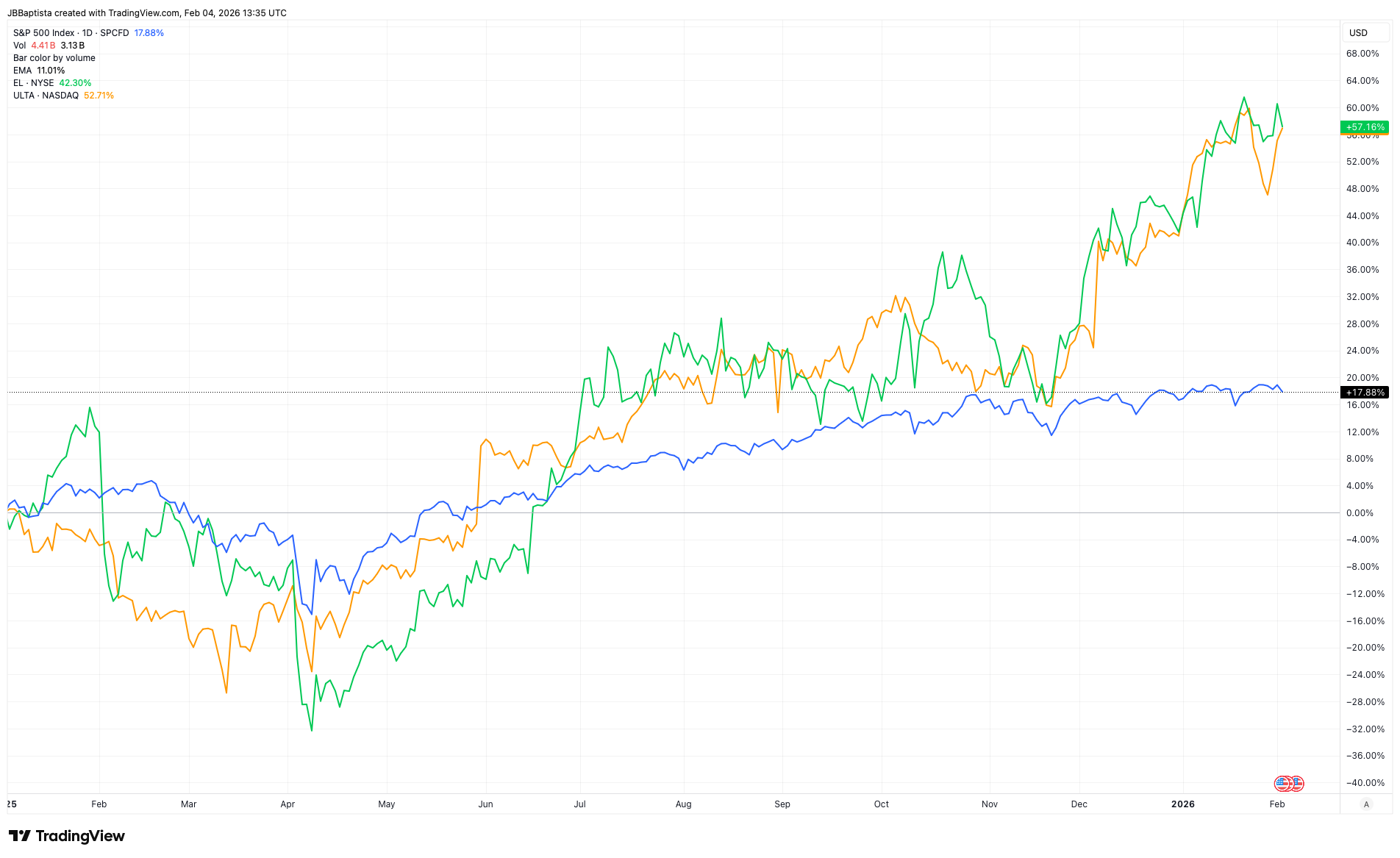
ULTA up +11.1% YTD; +66.5% 1-year
EL up +10.1% YTD; +42.5% 1-year
I’m expecting this index to continue ripping, and outperforming major stock indexes.
The Lipstick Index as a forward-looking recession indicator is clever, especially when markets price in economic softness before it materializes in the data. What's intresting is how the pandemic shifted this from lipstick to eye makeup and nails, showing the concept adapts. ULTA's +66.5% 1-year performance does suggest instituional money is betting on consumer behavior shifting toward affordable indulgence rather than big-ticket discretionary spending.